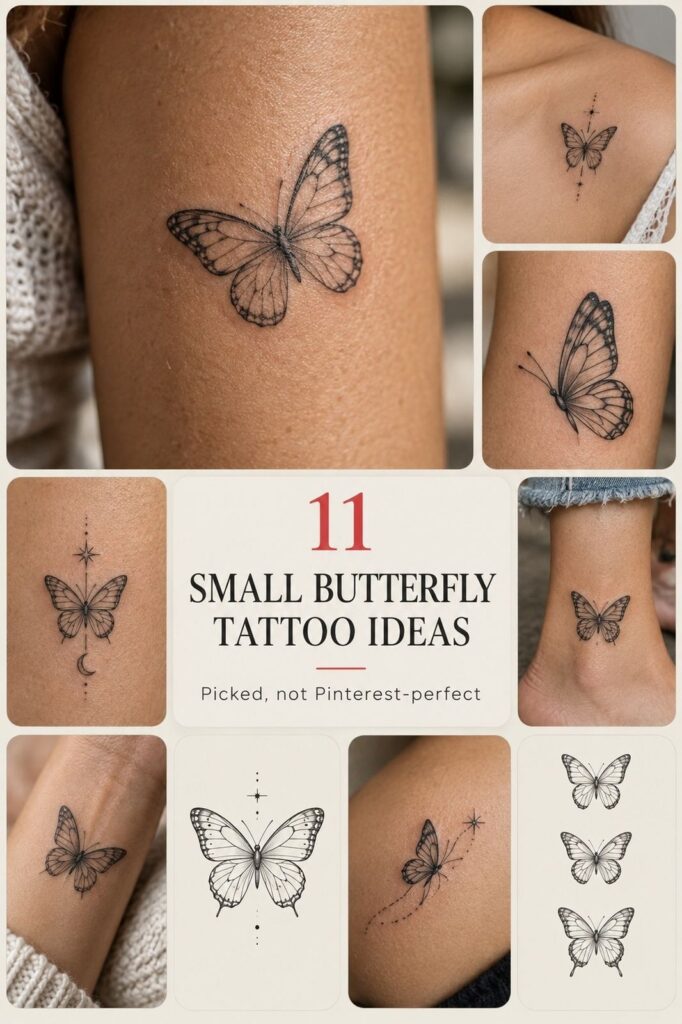
Small butterfly tattoo designs can stay crisp linework for years when the shape remains readable. Placement matters, too. So does breathing room. A slightly larger tattoo can be worth it if it protects the form. Small does not mean forgettable!
Don’t overthink: Pick Symbolic Wings With Fine Details.
I learned that after seeing a tiny wing pattern blur faster than expected. The tattoo looked striking ink at first. Later, the details softened into one dark spot.
Now I plan every small butterfly with the healed result in mind.
This guide walks through the choices in order. You’ll find intricate wing details, practical placement advice, and honest cost notes.
You don’t need to copy one design. You need a butterfly that still feels like you.
Before You Start: The Three-Check Rule
Before you save a reference, check three things: the wing shape, the placement, and the artist’s healed work. A fine-line stencil may look striking on paper. The same spacing can soften after healing.
You want an open silhouette that still reads as a butterfly from a short distance. If the wings need a paragraph of explanation, the design is too crowded. Your tattoo should communicate before anyone asks what it means.
Your reference folder should include healed tattoo references, not only fresh ink. Look for clean outer wings and open gaps. If you’re comparing small butterfly tattoo designs ideas, my small butterfly tattoo guide is a useful starting point.
Bring your artist a size range instead of insisting on one exact measurement. A dainty butterfly may need more space on ribs or fingers than it needs on an upper arm. Your artist can protect the pattern without losing its delicate, personal character.
You don’t need a long shopping list. You need a saved reference, a placement decision, and a realistic tattoo budget.
Write down what you want the butterfly to express. It might represent freedom, memory, change, or something sacred to you.
The Size Test
Print or sketch the butterfly at the size you’re considering. Check it from several feet away. The wing shape should remain obvious, even when the interior marks become less precise.
A readable wing silhouette is often more valuable than extra decoration. If the design feels too plain, add one meaningful detail. Don’t add five small details that compete for attention.
Finger and ankle tattoos often need more restraint. Friction can blur fine marks. If you want examples with stronger contrast, compare the small black butterfly tattoo collection before you choose the final scale.
A useful test is to cover the interior marks with your hand and look only at the outside contour. If the butterfly still reads clearly, the structure is doing its job. If it disappears, the design needs stronger wings or a larger scale.
Read the Shape Before the Meaning
Meaning matters, but shape comes first. A symbolic butterfly should still look balanced without a quote, date, or long explanation. The wings carry the first impression.
Decide whether you want rounded, pointed, open, or folded wings. The strength butterfly tattoo meaning guide may help if you want the design to feel resilient. The snake and butterfly tattoo meaning article offers a more complex direction.
Your artist can simplify the symbolism into one visual decision. That keeps the tattoo meaningful symbolism without making it busy. The best small designs usually have one clear idea.
I also like to ask what should remain if the tattoo has to lose one element. That answer reveals the real center of the design. A personal meaning works better when the visual idea is equally clear.
- Start With Delicate Small Butterfly Linework
- Pick Symbolic Wings With Fine Details
- Place Tiny Butterflies Along Your Collarbone
- Keep Black Ink Crisp And Minimal
- Plan A Colorful Birthstone Butterfly
- Choose An Edgy Butterfly And Star Pair
- Add Botanical Details To Small Wings
- Match Unique Butterflies Across Both Wrists
- Select A Meaningful Butterfly Finger Tattoo
- Shape Flowing Butterflies Along Your Ankle
- Protect Intricate Ink During Healing
1Start With Delicate Small Butterfly Linework
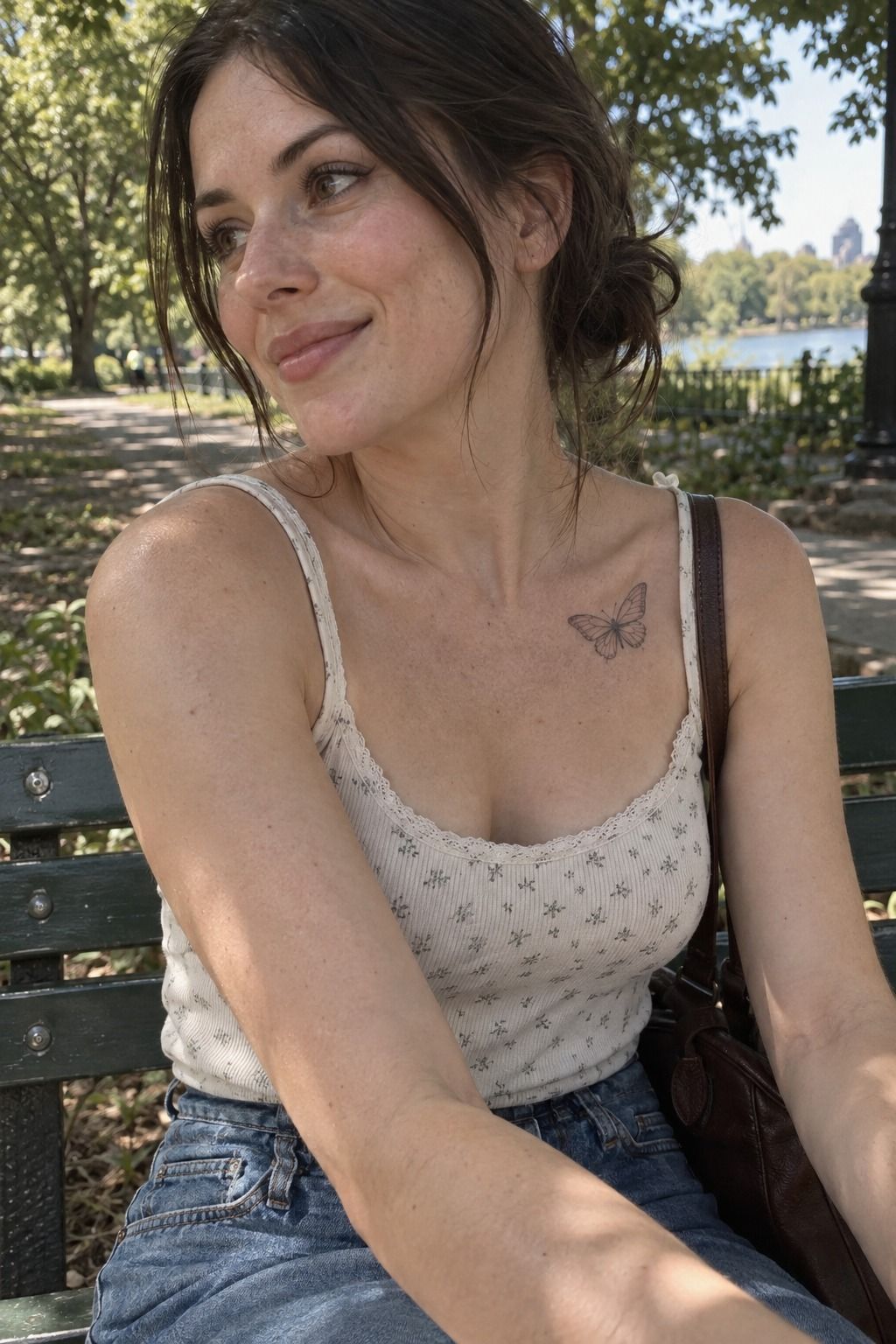
Begin with the outer silhouette. For a collarbone design, try open wings, a narrow body, and veins that follow the natural curve of the bone. This creates single-needle linework that feels understated rather than unfinished.
Ask your artist to separate the primary outline from the interior veins. If every mark has the same weight, your eye won’t know what matters first. I prefer a sharp outer wing with lighter interior detail.
That hierarchy helps the tattoo age. The outline gives the eye a path. The open areas prevent the wings from becoming a dark patch.
You don’t need heavy shading to make the design visible.
Skin tone affects contrast, too. Your artist should adjust the line weight to your undertone. A graceful wing design can remain delicate while still having enough contrast to read clearly.
Don’t shrink the reference until the wings become crowded. If you’re considering unique small butterfly tattoo designs, compare this approach with the small black butterfly tattoo collection. Removing one unnecessary vein often improves the result.
2Pick Symbolic Wings With Fine Details
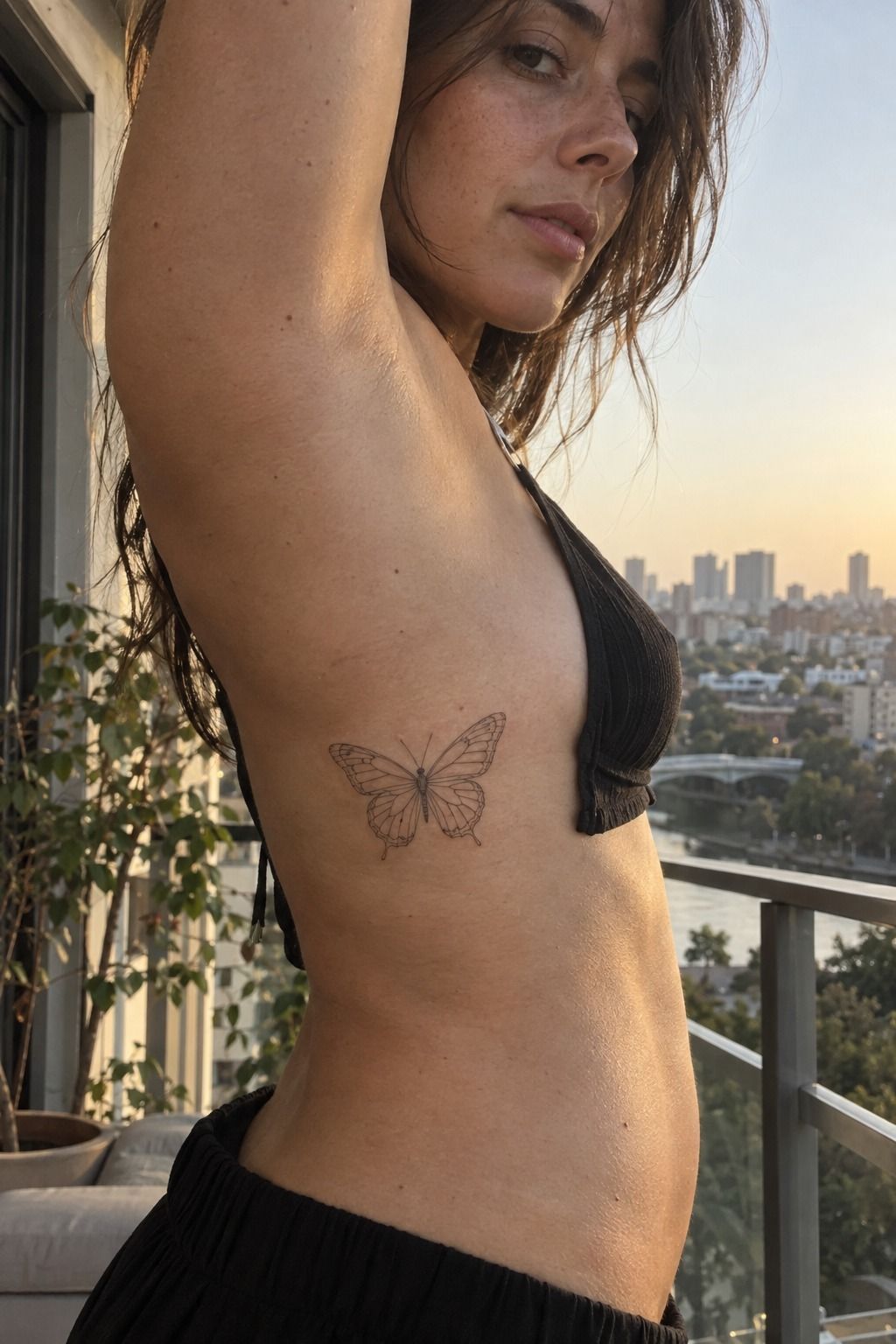
Choose the wing structure before you choose decorative marks. A symbolic wing framework might use one central vein, two clear outer curves, and a few carefully spaced accents.
Fine details should support the structure rather than compete with it. I’d rather see three readable marks than ten lines that merge after healing. That restraint can still feel personal, expressive, and polished.
If the butterfly represents transformation, let the wing shape carry that idea. A lifted wing can suggest motion.
A folded wing can feel more private. You don’t need extra symbols to make the meaning clear.
3Place Tiny Butterflies Along Your Collarbone
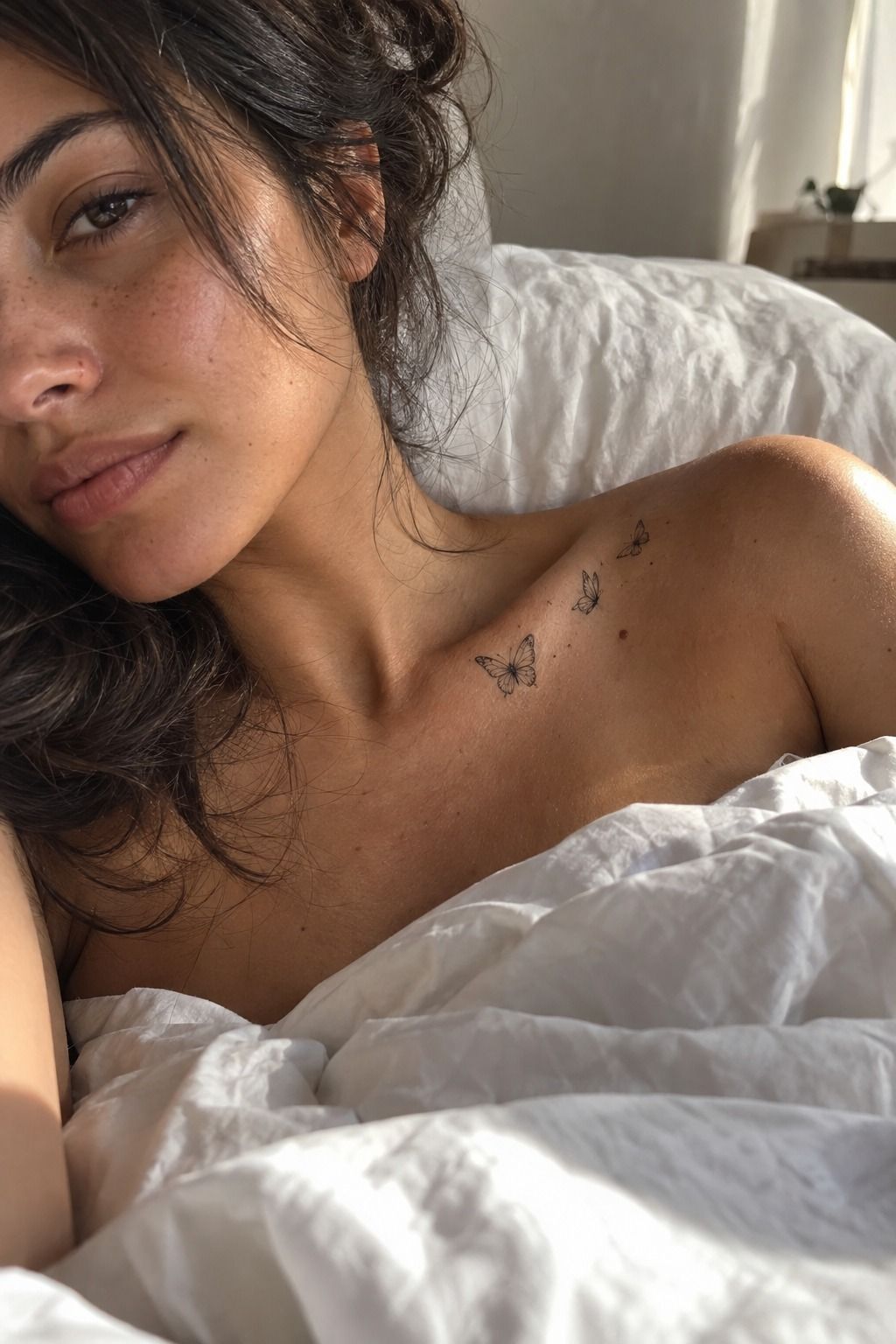
Choose the collarbone when you want visibility and flowing body movement. The body can follow the bone slightly. That keeps the butterfly connected to your anatomy instead of making it look pasted on.
Ask for a stencil at the exact size before the needle starts. Check it straight on and from a slight angle. Your shoulder changes the way the wings sit.
Keep the smallest details away from areas that crease often. A feminine collarbone placement can still have a bold outline. The design may disappear under a neckline or become a visible focal point.
Before your appointment, wear a top that exposes the entire collarbone. Take a photo from a relaxed position. Your artist can then judge whether the body angle still looks natural.
Don’t choose the collarbone only because it photographs well. Clothing may rub the area during healing.
It can also feel sensitive. If you’re comparing narrow placements, browse these small moth tattoo ideas for useful shape references.
4Keep Black Ink Crisp And Minimal
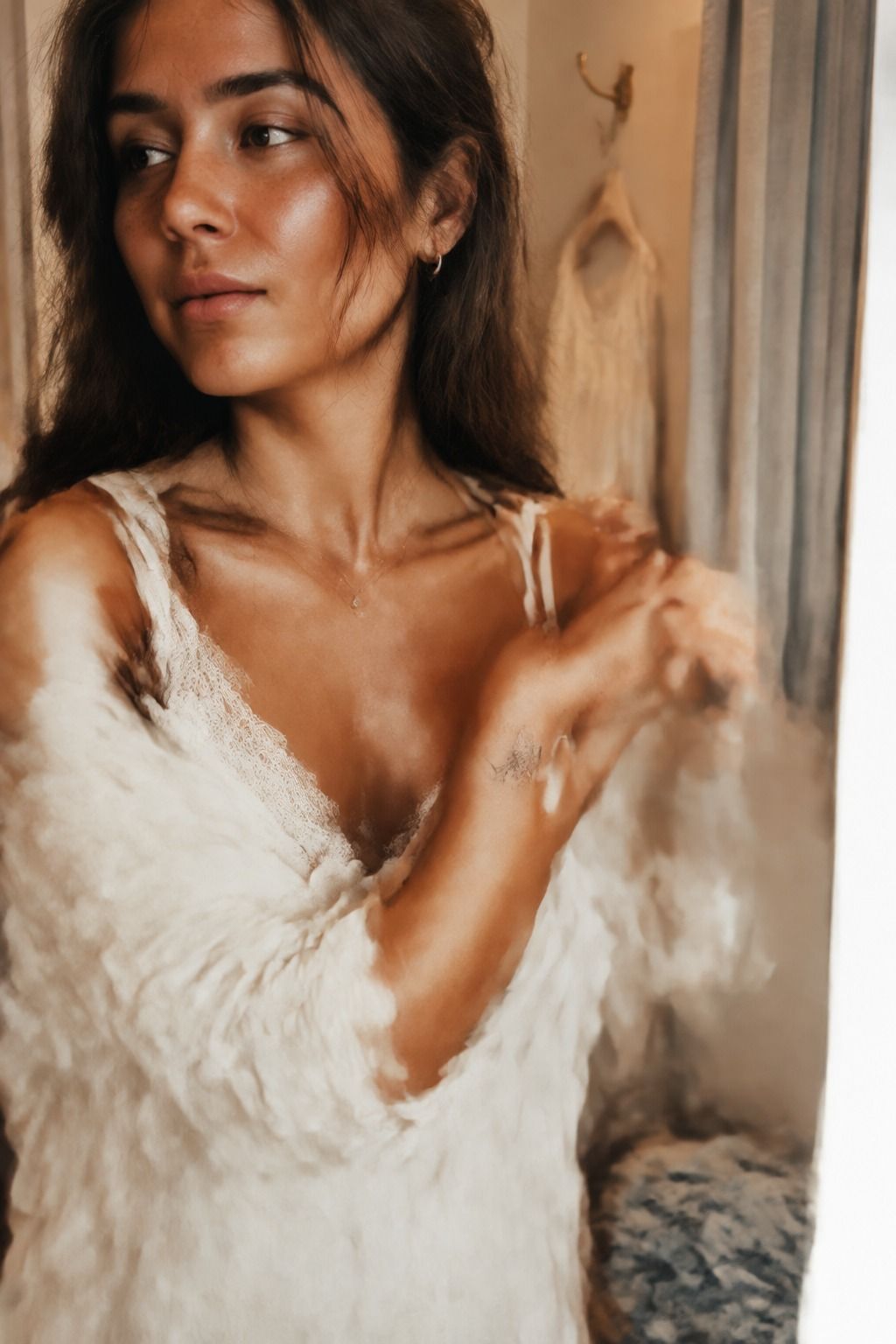
Black ink is a reliable foundation when longevity matters.
5Plan A Colorful Birthstone Butterfly
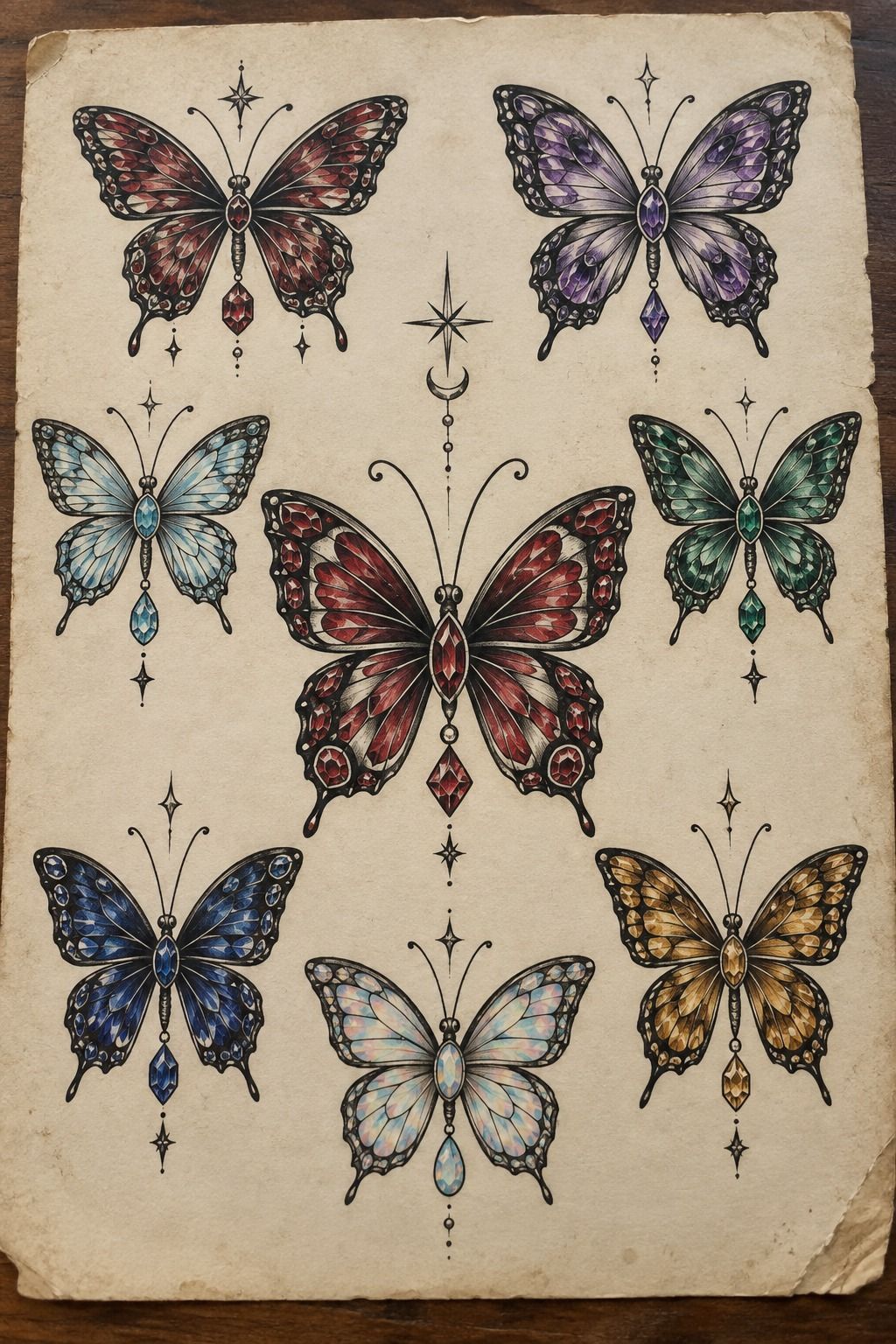
Start with the butterfly’s black structure. Then decide whether a birthstone accent deserves a place. A single color mark can feel vibrant color without taking over the entire design.
Ruby red, sapphire blue, or emerald green may represent a birth month or private milestone. I’d keep the color limited. A small tattoo becomes less timeless colorwork when every section competes for attention.
Ask how the pigment behaves on your skin. Sun exposure can affect color differently from black ink. If you want a painterly direction, compare this watercolor butterfly tattoo collection before you commit.
The best colorful design still has a readable silhouette when the color fades. Choose open wings, a strong outline, and one personal accent. That combination stays expressive for longer.
Color can also affect cost. Some artists charge more for extra pigment or a longer appointment. Ask for a clear written tattoo quote before booking so your plan fits your budget.
A single accent may be enough! The color should feel intentional, not like a test of every available shade.

6Choose An Edgy Butterfly And Star Pair
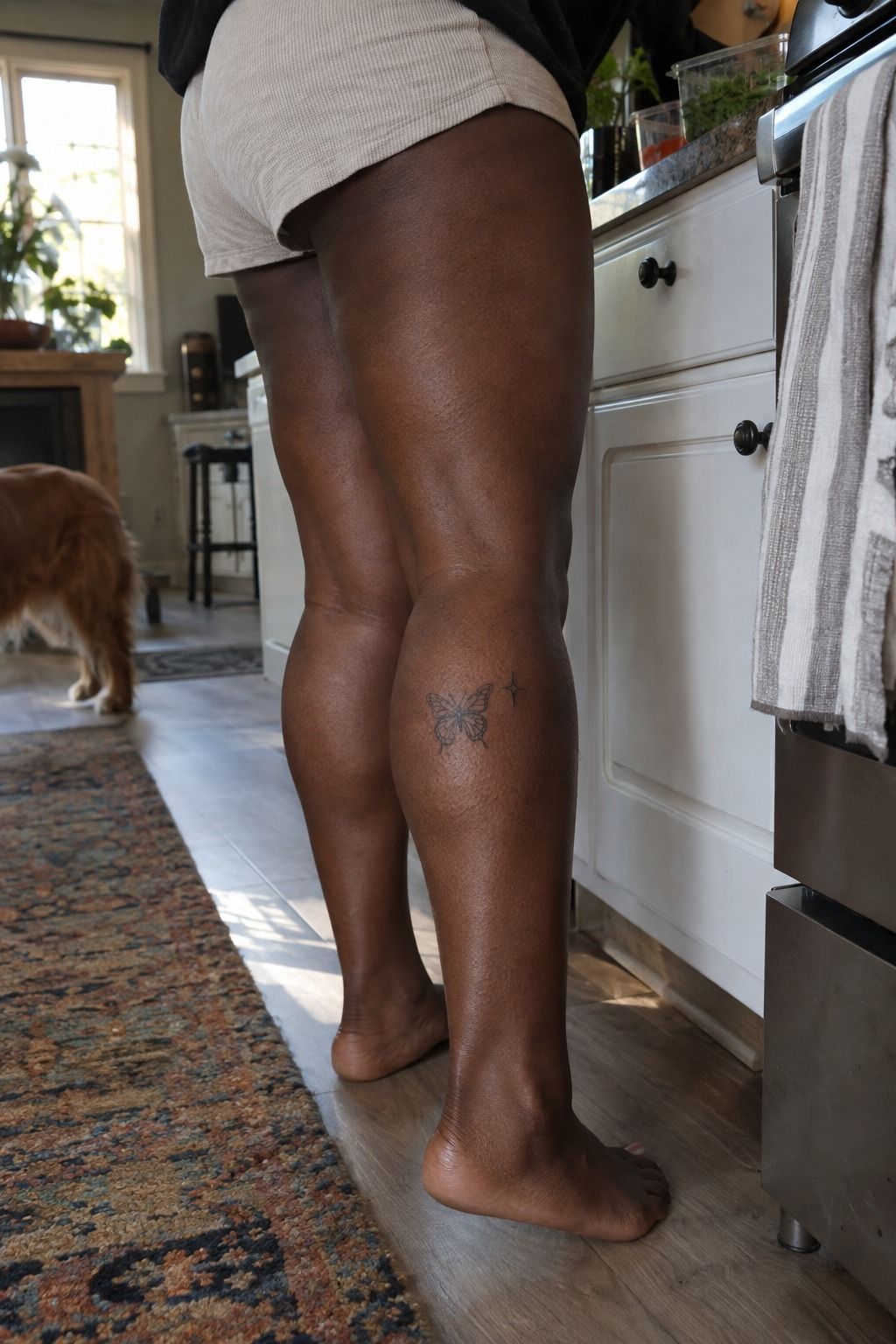
A butterfly and star create contrast without adding a large second subject. The pair can feel powerful symbolism when both shapes remain simple. Your star may be tiny, sharp, or slightly irregular.
Keep the two symbols close enough to feel connected. Don’t let their outlines touch. A little negative space will make both shapes look more polished.
I prefer one butterfly and one star over a scattered constellation. The pair feels intentional. It also gives each mark more visual weight.
Ask your artist to check the stencil while you’re standing. A calf changes shape when you flex. The design should still look balanced in motion.
A daring wing silhouette matters more than a pile of ornaments. If you’re drawn to darker symbolism, the red butterfly tattoo meaning guide may help you choose the star’s role.
That pairing can be worth it! You get two connected symbols without turning a small tattoo into a crowded scene.
7Add Botanical Details To Small Wings
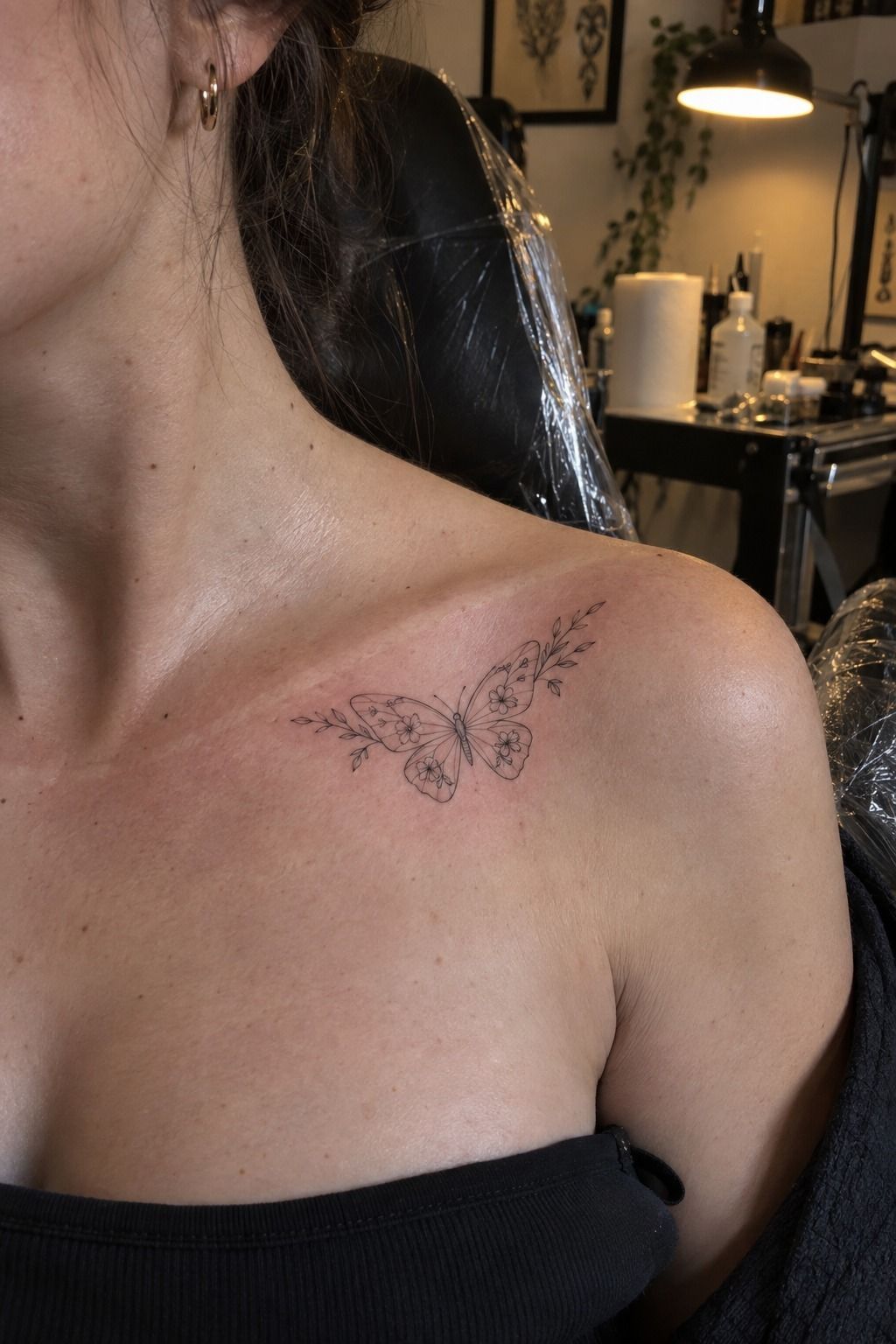
Botanical details can soften a butterfly, but they need restraint. Try one tiny leaf, a short stem, or a playful floral mark near the body.
Avoid wrapping vines around every wing. Fine stems can merge with veins as the tattoo ages. One clear botanical shape will stay more readable.
A flower can change the mood. A pointed leaf feels sharper.
A rounded petal feels more romantic botanical detail. Choose the detail that supports the butterfly’s meaning.
Ask your artist to remove anything that disappears at the final size. That edit may feel disappointing during planning. It usually creates a stronger tattoo.
If you want to study another small winged subject, compare these small moth tattoo ideas before choosing a botanical accent.
One tiny leaf can make the design feel whimsical without stealing attention from the wings. Keep the connection clear and the stem short.
8Match Unique Butterflies Across Both Wrists
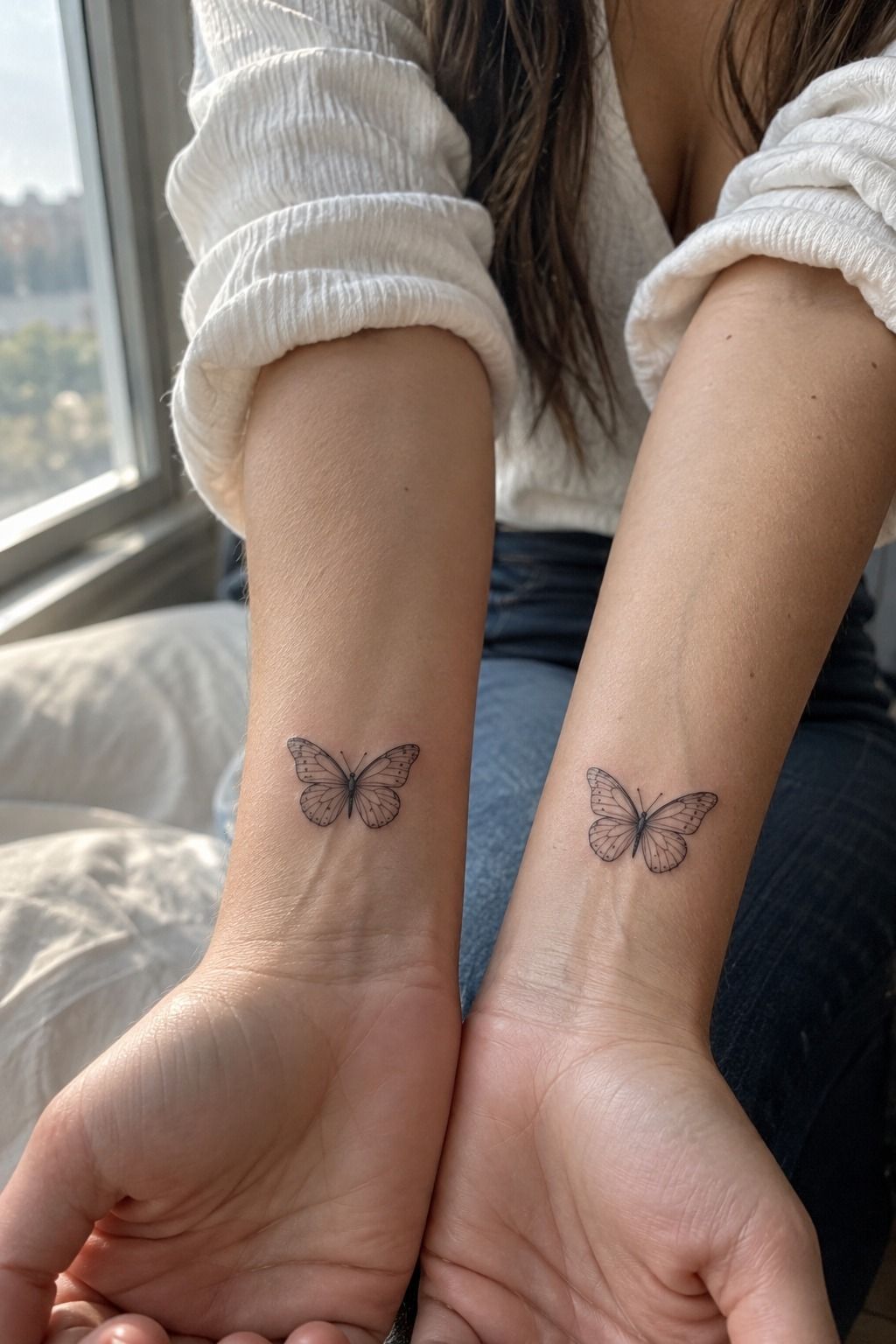
For matching wrist tattoos, repeat the visual language instead of making identical copies. One butterfly can have a slightly lifted wing while the other uses a turned body.
Use the same line weight, scale family, and level of detail. That creates a balanced matching pair without forcing perfect symmetry.
The wrist moves constantly, so leave enough separation between the butterfly and the crease. Ask your artist to check both arms in a relaxed position. A mirrored stencil can shift once your hands move naturally.
Matching tattoos don’t have to be identical to feel connected. A small difference can make the pair more personal and expressive.
9Select A Meaningful Butterfly Finger Tattoo

Finger tattoos demand restraint. The skin faces friction, washing, and constant movement. A delicate finger tattoo needs fewer lines than a forearm design.
Choose the top or side of the finger based on your lifestyle. The side may experience more rubbing. The top may offer a cleaner view but still needs sun protection.
A tiny butterfly can work well as an outline. Skip crowded veins if the final size is very small. Your artist may suggest one body line and two wing curves.
Finger tattoos sometimes fade faster than tattoos in more protected areas. Ask whether a future touch-up is likely. That information helps you judge the long-term value.
If you want a more durable design, compare the small butterfly options in this symbolism guide. You may decide that a slightly larger placement is the better choice.
A finger butterfly can look edgy with one pointed wing and a clean body. It doesn’t need extra shading to make an impression.
10Shape Flowing Butterflies Along Your Ankle
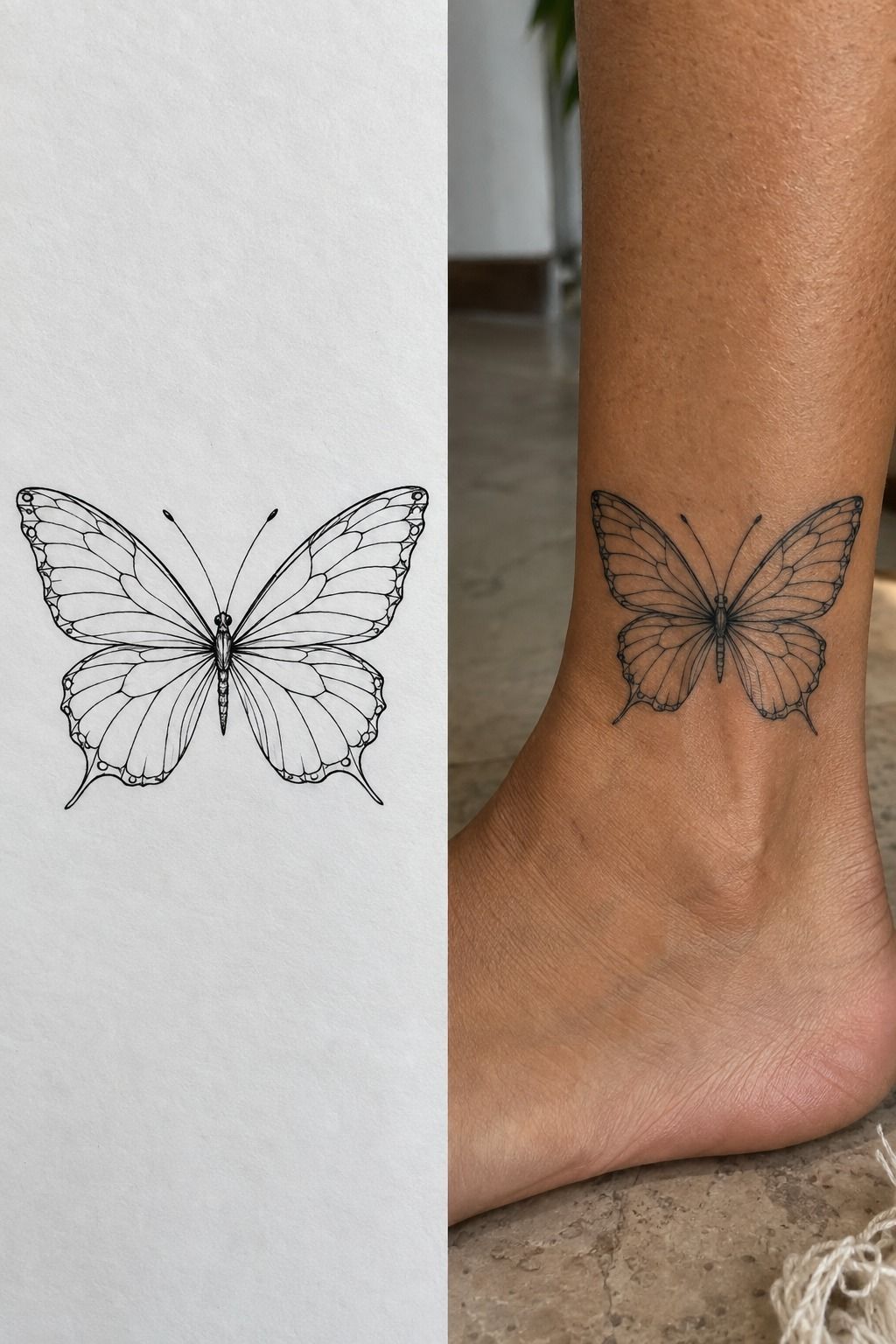
A row of butterflies can follow the ankle bone. Each butterfly needs enough separation to remain distinct. Start with the largest shape near the widest area, then let smaller forms trail away.
That creates flowing ankle movement without forcing every butterfly to match. Varying the scale can look more natural. Keep the spacing consistent enough to avoid visual clutter.
Ask your artist to show the stencil from the front, side, and back. The ankle has several changing planes. A design that looks balanced from one angle may shift from another.
Choose open spaces instead of filling every wing. The ankle already has strong contours. A graceful ankle line can follow them without heavy shading.
Before booking, ask how long the session may take. Wear loose clothing afterward. Plan for gentle movement while the skin settles.
For another body-flow reference, compare these small moth tattoo placement ideas with your ankle sketch. The goal is a design that follows the body, not one that fights it.
A haunting trail of wings can feel dramatic when the spacing is quiet and deliberate. Leave enough skin between each form.
11Protect Intricate Ink During Healing
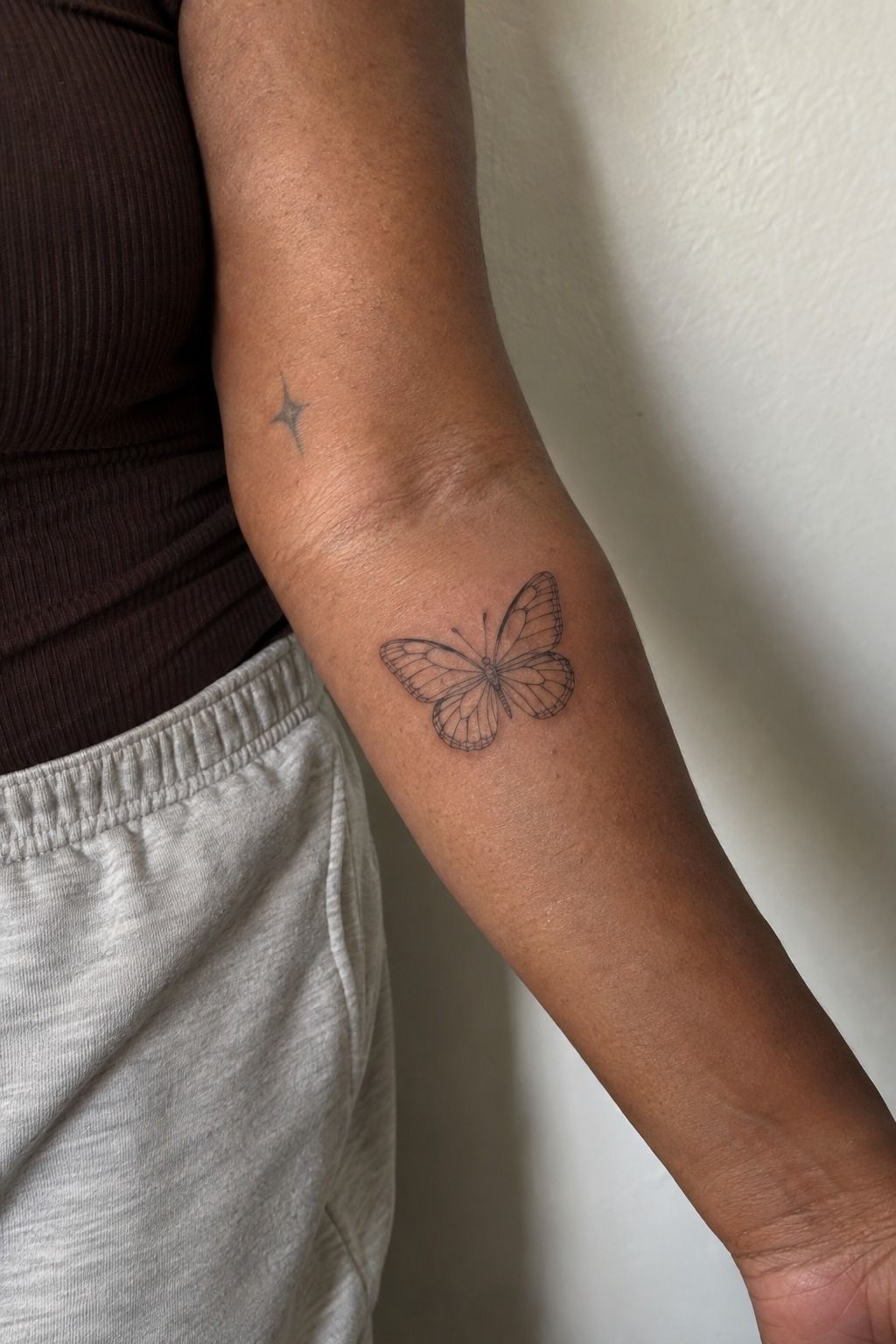
Healing is part of the design process. Your intricate linework needs protection while the skin settles. Follow your artist’s instructions instead of copying random advice online.
Wash gently with the recommended cleanser. Apply a light layer of the suggested moisturizer. Don’t pick, soak, swim, or expose the tattoo to direct sun while the surface heals.
The visible surface often takes about two to three weeks. Complete healing can take two to three months. Your tattoo may look cloudy, dry, or uneven during this period.
Increasing pain, heat, or unusual discharge deserves professional medical advice. I’ve judged a healing tattoo too early before. Patience would’ve saved me needless worry.
After healing, use broad-spectrum sunscreen when the tattoo is uncovered. Black ink with good placement usually ages reliably. Your habits still matter, especially during long sun exposure.
Take a healed reference photo for your records. Compare it with the original reference after several months. That will show whether the spacing and contrast worked.
Healing can make the tattoo look less raw than it did on appointment day. That change is normal. Judge the final design only after the skin has fully settled.
Color, Contrast, and Skin Tone
Color should support the design. It shouldn’t hide the silhouette. A sleek contrast plan begins with the outline, then adds color only where it helps.
Your artist should consider your undertone and the pigment’s behavior. A color that looks bright in the bottle may heal more softly. Ask to see healed work on skin close to yours.
An ethereal color accent can be beautiful, but subtle color needs enough space. If the mark is too tiny, it may disappear completely. A slightly larger accent can offer better value.
Sun protection matters even more with bright pigments. Use sunscreen after the tattoo has fully healed. You’ll preserve the color and the investment.
Black, red, and blue can age differently. Ask whether the color plan needs a stronger outline or a larger accent. The answer should come from healed examples, not only fresh work.
Fine Line or Solid Black? The Longevity-First Rule
I’ve changed my mind about tiny tattoos more than once. At first, I wanted every butterfly to carry a detail symbol, a botanical curl, and a wash of color. Then I saw how quickly crowded lines lose separation.
Now I’d rather remove one ornate wing detail than watch the whole design become muddy. That choice may feel severe during planning. It often looks smarter after healing.
The strongest design usually comes down to hierarchy. A bold outer outline gives your eye the butterfly first.
Open space gives the wings room to breathe. A meaningful accent comes third.
That order works on the collarbone, wrist, ankle, and finger. Each location still needs its own adjustment. You’ll want an artist who understands how skin moves.
People underestimate healed references. Fresh tattoos look raw and dramatic under appointment lighting. Healed photos show whether the artist understands spacing, skin movement, and restraint.
If an artist only posts fresh work, I’d keep looking. Your body deserves proof. A portfolio with healed examples offers better value than a polished promise.
Cost matters, but the cheapest appointment isn’t always the smartest choice. Detailed linework requires control. Compare the artist’s experience, healed results, and elegant tattoo technique before you compare prices.
Set a budget before you request a quote. A higher cost may be worth it when the artist has a strong record with small designs. You’re paying for judgment as well as time.
You don’t need to make the tattoo loud for it to be memorable. A stylish butterfly can feel empowering when its shape is clear and personal. That’s why I keep returning to simple black linework.
A classic black outline is often the safest starting point for longevity. Color, shading, and ornaments can come later if the design still needs them.
An expressive tattoo doesn’t have to explain everything at a glance. The right curve, angle, or accent can hold the personal meaning quietly.
A Few Things Worth Answering
How much does a small butterfly tattoo usually cost?
A small butterfly tattoo often costs about $100 to $300 in the United States. A shop minimum may be around $50 to $100. Hourly rates may range from $100 to $250.
Your artist, region, placement, and detail level affect the final quote. A simple outline may cost less than a color piece. Ask what’s included before you decide whether the tattoo is worth it.
See more small butterfly tattoo examples before your consultation.
Are small butterfly tattoo designs a good idea for a first tattoo?
Yes, especially when you choose a tolerable placement and readable linework. A clear butterfly silhouette can feel personal without requiring a long session.
Your artist should explain pain, aftercare, and possible aging before you book. You should also review healed work in the same style. That research can save money later.
A personal first tattoo can be understated while still carrying real meaning. Start with the shape you’ll be happy to see every day.
How do I choose a tattoo artist for small butterfly tattoo designs?
Look for clean linework, healed photographs, and tattoos on skin tones similar to yours. Check the studio’s hygiene standards. Ask whether the artist specializes in fine-line work.
If you’re drawn to color, compare the artist’s healed work with these watercolor butterfly tattoos. A vintage-inspired portfolio can still show excellent technical control.
Look for polished healed results, not only dramatic fresh tattoos. The artist’s restraint matters as much as their ability to add detail.
How much do small butterfly tattoo designs hurt?
Pain varies by person and placement. Ribs, feet, hands, and the sternum are often more sensitive. The forearm, thigh, and shoulder are commonly more tolerable.
Your session may feel sharp, warm, or scratchy. A small design is usually brief. Tell your artist if you need a pause.
A fierce placement isn’t automatically the most painful one. Ask about the exact area and how long your design should take.
How long does a small butterfly tattoo take to heal?
The surface commonly heals in two to three weeks. Complete healing can take two to three months.
Follow your artist’s aftercare. Wash gently, moisturize lightly, and avoid sun, pools, and picking while the tattoo settles. Don’t judge the final result too soon.
Your healed butterfly tattoo may look softer than it did on day one. Softness isn’t the same as failure. Wait until the skin has fully recovered.
What’s the best placement for small butterfly tattoo designs?
The forearm and upper arm are practical choices. They’re usually more tolerable and easier to protect from friction.
The collarbone offers visibility. The ankle and finger feel more dainty placements, but they can experience more rubbing. Your artist should match the placement to your lifestyle.
A masculine placement can use the same butterfly shape with a heavier outline or stronger angle. The subject itself doesn’t dictate the mood.
Where I’d Start First: The Placement-First Rule
If I had to pick one step, I’d start with placement. A readable silhouette on forgiving skin will age better than crowded details anywhere. That’s the classic longevity rule I return to most often.
Pin this guide for later. Show your artist a healed reference before choosing the final butterfly. A clear plan gives you more control over the result and the cost.
Small tattoos can be empowering ink, expressive, and personal. Choose the shape first. Let the meaning and details support it.
A meaningful butterfly tattoo can stay quiet and still feel iconic. Protect the silhouette, respect the healing process, and let the design remain yours.

2 responses to “How to Design a Small Butterfly Tattoo That Ages Well – 11 Ideas”
[…] that idea for later and compare it with this tiny butterfly tattoo design before booking. A tiny crown can still feel empowering, meaningful, and stylish when every mark has […]
[…] can compare the structure with these minimalist butterfly tattoo designs before making the final edit. Look for a bold idea, not a design to […]