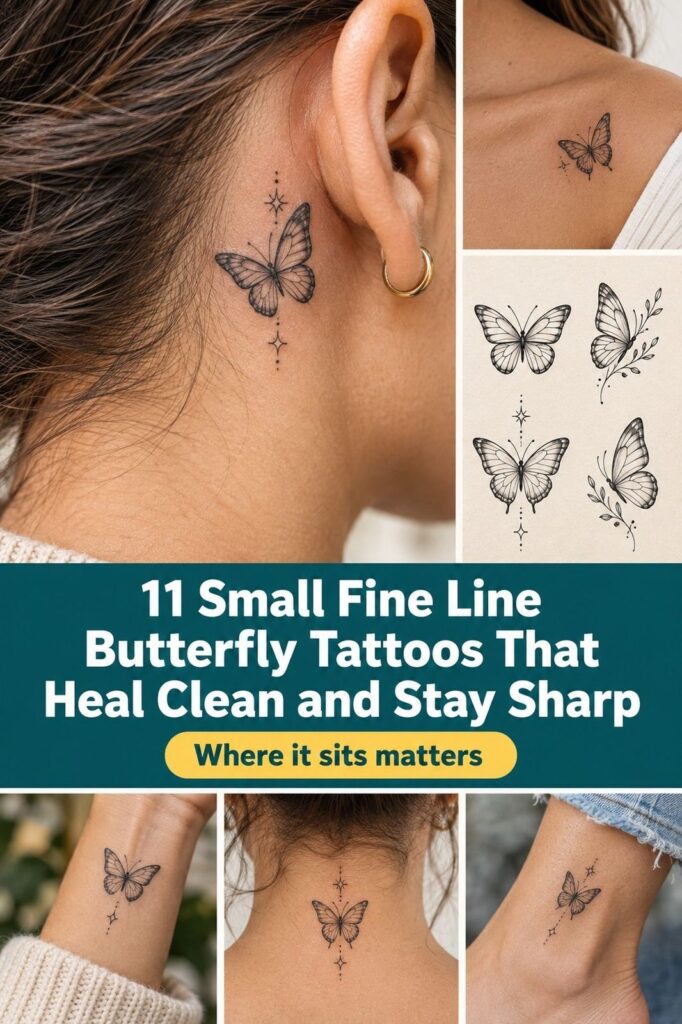
Small fine line butterfly tattoo designs can stay crisp for years when placement, spacing, and aftercare work together. I once chose detail over breathing room, and the result blurred sooner than I wanted. These delicate linework ideas keep the shape readable, personal, and easy to live with.
I’m drawn to butterflies because they can feel symbolic without becoming obvious. A tiny outline may mark a private change, a person, or simply a love of graceful shapes. You don’t need a dramatic explanation.
One practical truth matters most: smaller doesn’t always mean easier. The artist, placement, line weight, and healing habits all affect the final value. Choose the design you’ll still enjoy years from now.
- Small Fine Line Butterfly Tattoo Behind the Ear
- Would a Wrist Butterfly Work for You?
- Follow the Collarbone’s Natural Line
- Small Fine Line Butterfly Tattoo on a Finger
- Florals, but Keep the Wings Clear
- Let the Butterfly Look Mid-Flight
- What Should the Initials Say?
- Use Color as the Accent
- Moonlight and Meaning: A Butterfly Pairing
- Why the Ankle Needs Extra Planning
- Build Symmetry Without Making It Stiff
1Small Fine Line Butterfly Tattoo Behind the Ear
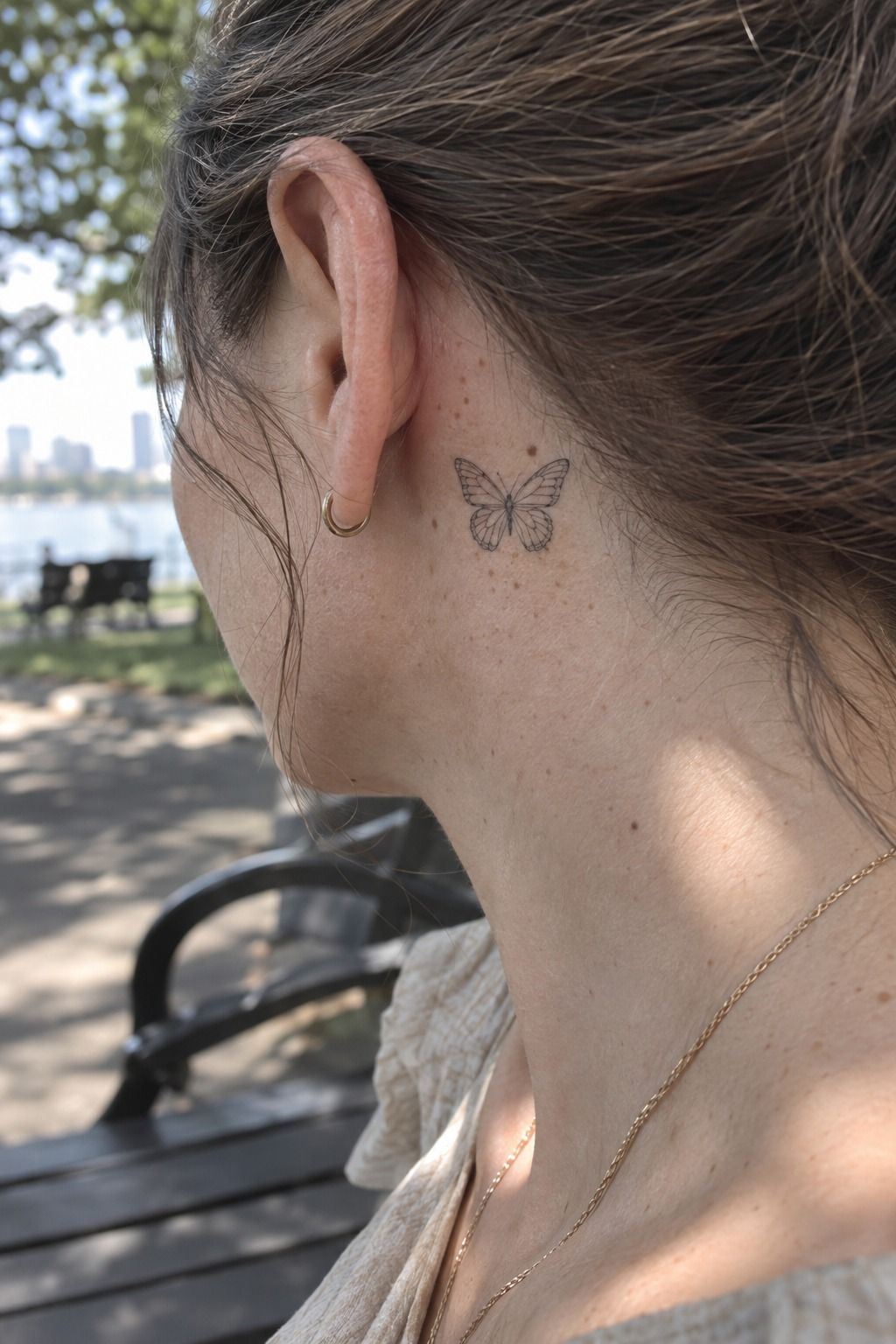
Behind-ear placement gives your butterfly a discreet, dainty silhouette that appears when you tuck your hair back. You’ll want open wings with enough negative space for each section to stay readable. This placement can look striking without demanding attention.
I’d ask your artist for single-needle black ink and a modest design that follows the curve behind your ear. Tiny antennae can disappear when they’re packed too closely together. Prioritize the wings and body first.
That’s what people notice!
This spot can be sensitive. The skin is thin, and the machine’s vibration may feel sharper than expected. A clean, minimal butterfly will suit you better than an ornate design with many interior marks.
You’ll also need to consider hair, hats, and headphones during healing. Friction can irritate fresh ink. If this discreet idea feels worth it, compare these small butterfly tattoo designs with this small butterfly tattoo collection.
2Would a Wrist Butterfly Work for You?
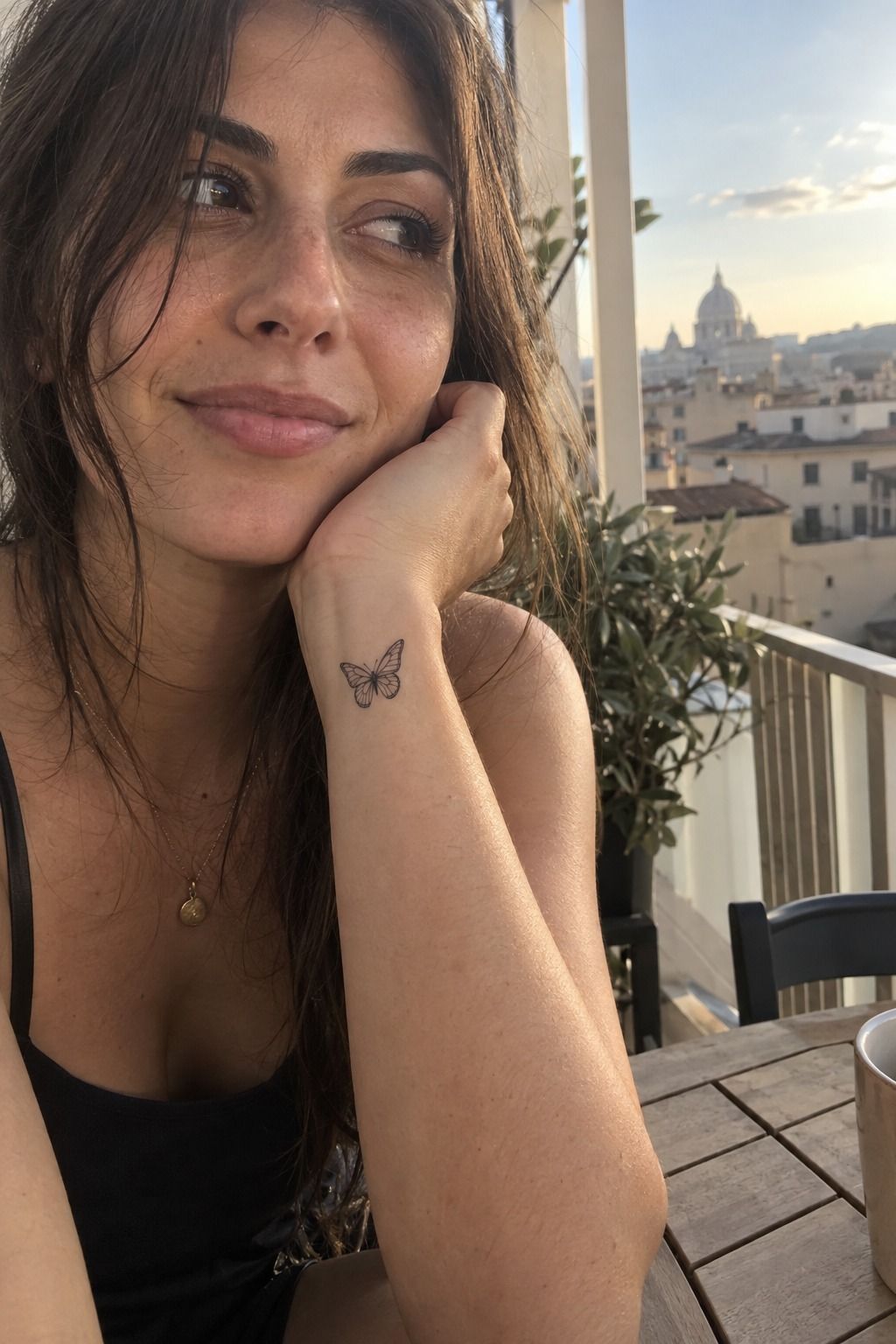
A wrist butterfly feels visible, expressive, and easy for you to check while it heals. The shape should follow your wrist’s natural direction. A slightly vertical design can look sleek and flowing when your hand is relaxed.
I’d keep the lower body simple. Too many marks near the wrist crease may soften with movement. Clear wings usually offer better long-term value than a crowded miniature.
The wrist gets washed, rubbed, and exposed often. Your aftercare has to be consistent. Wash gently, moisturize as directed, and protect healed ink from strong sunlight.
You’ll also see this tattoo every day. That’s useful if visibility motivates you, but it can feel intense if you prefer private ink.
For a darker option, compare this small black butterfly tattoo guide. A bold black outline can improve readability without making the piece heavy.
3Follow the Collarbone’s Natural Line
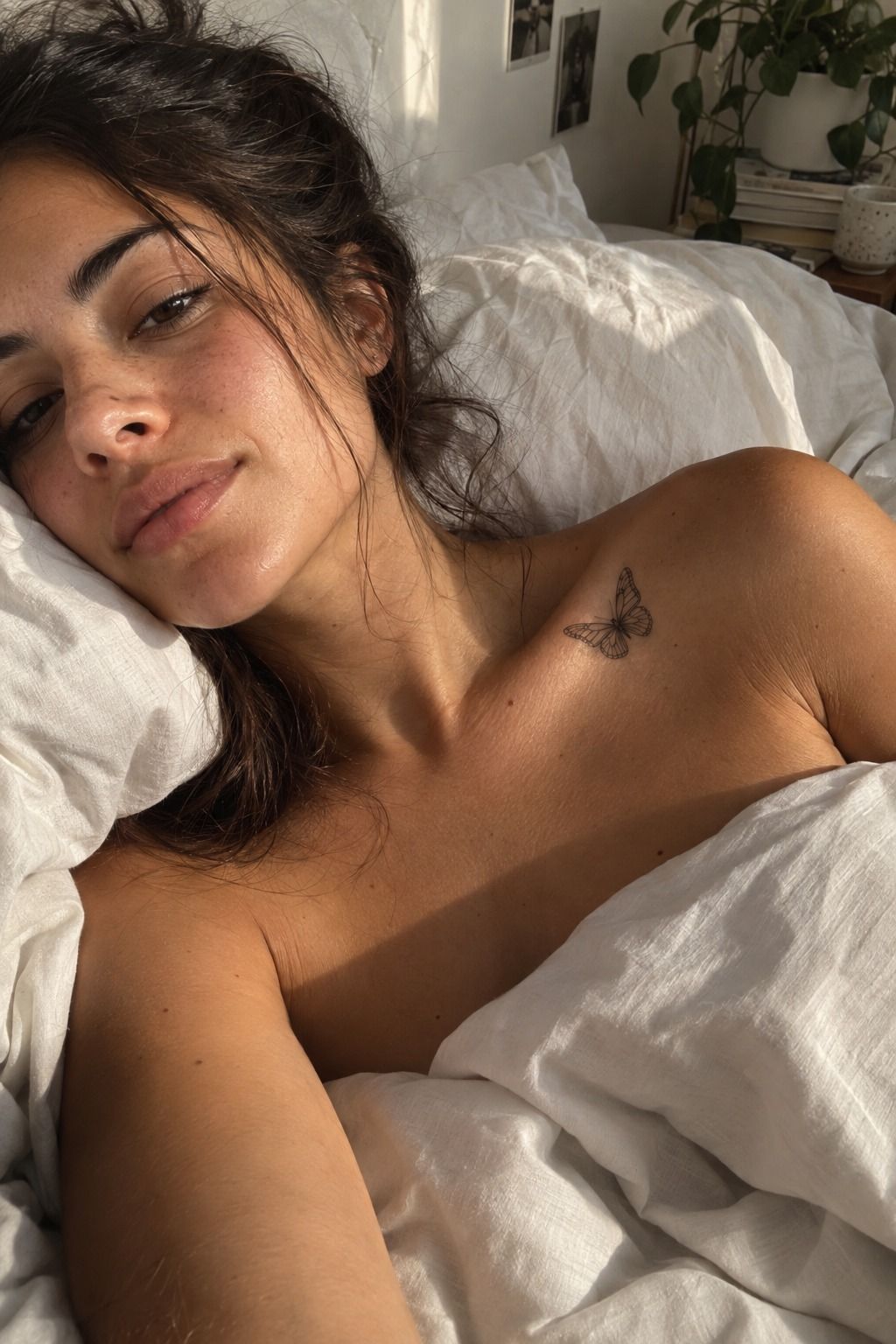
A collarbone butterfly can look graceful and intimate because the placement follows a natural horizontal line. The wings can sit slightly apart from the bone, or the body can align with its curve.
Ask your artist to place the stencil while your shoulder is relaxed. Posture changes the collarbone’s line. A stencil that looks balanced while you’re tense may shift when you stand naturally.
Choose fine black linework with open wing panels rather than crowded ornament. Your butterfly doesn’t need every tiny vein to feel intricate. A few deliberate marks can look understated and remain readable as the ink settles.
This placement works well for a romantic idea without making it overly obvious. If you’re considering a botanical direction, compare these rose butterfly tattoo ideas with broader small butterfly tattoo designs.
4Small Fine Line Butterfly Tattoo on a Finger
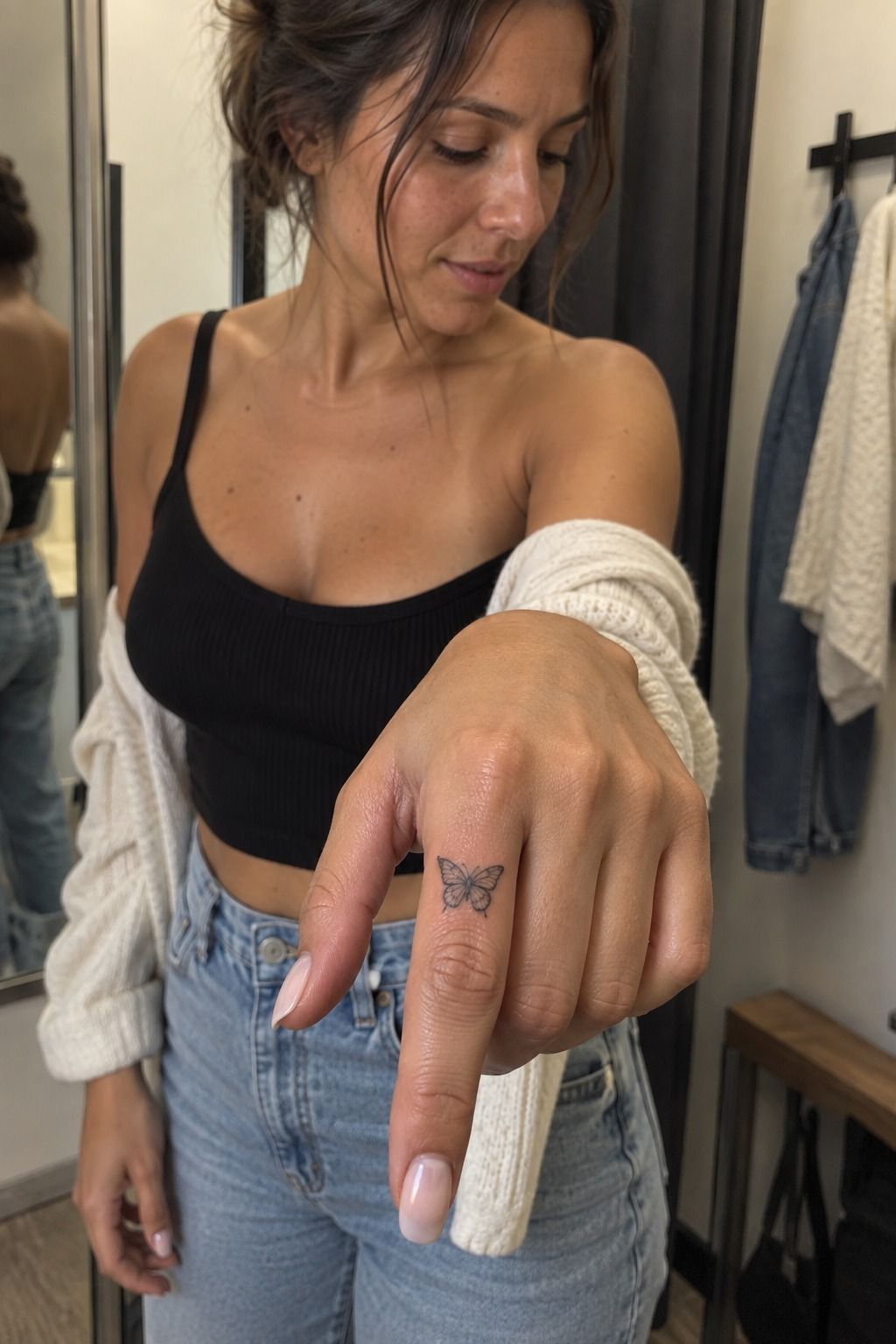
Finger placement gives your butterfly an edgy, visible quality, but it asks more from both you and the artist.
5Florals, but Keep the Wings Clear
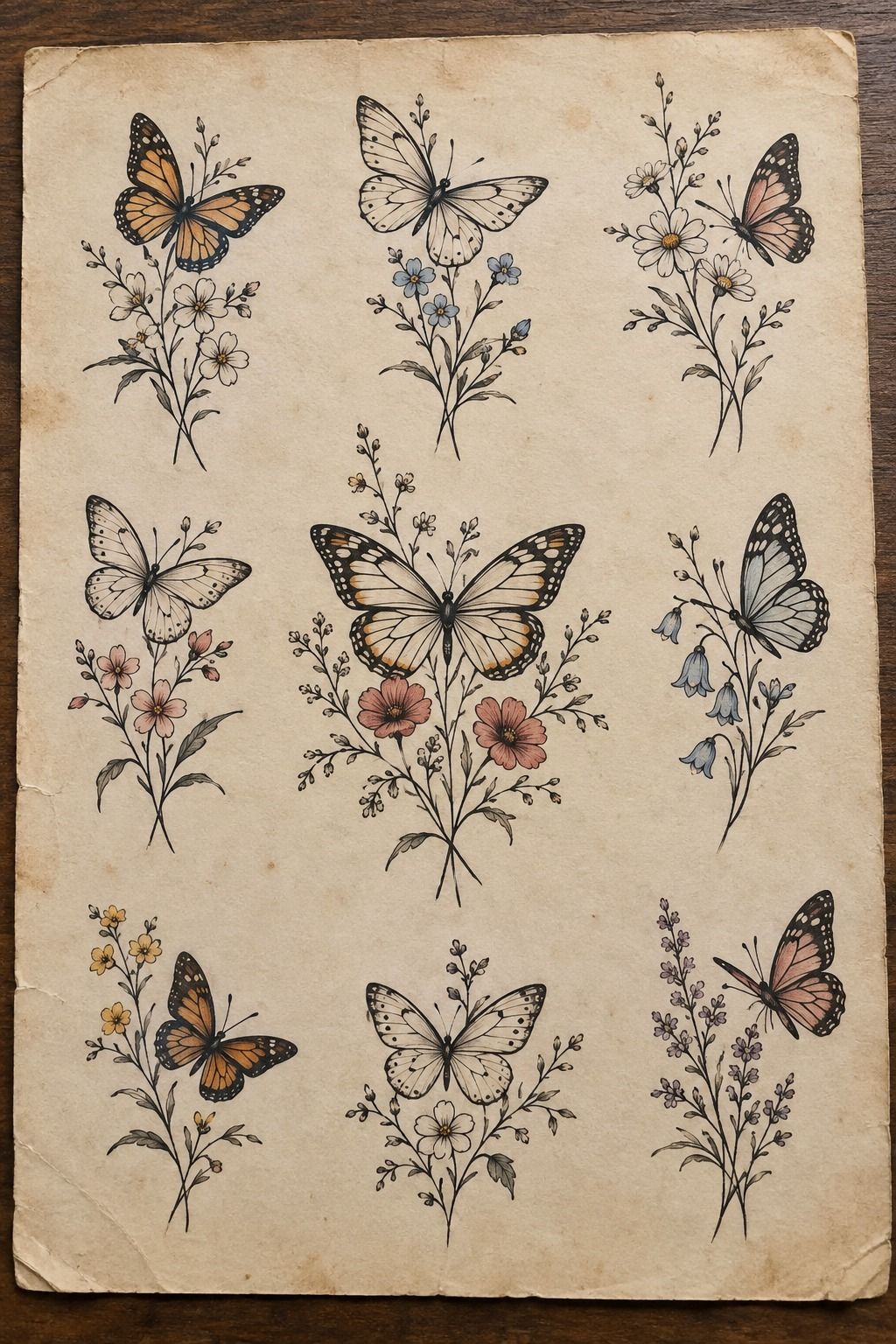
A butterfly with flowers can feel romantic and expressive without becoming crowded. Start with one flower, one stem, or a few leaves. The butterfly should remain the first thing people recognize.
A delicate floral sprig can sit beside the wings without competing with them. Ask your artist which marks will survive at your chosen size, especially if you love tiny leaf veins.
I’d skip a crowded bouquet around a very small butterfly. It may look charming in a sketch and become a dark cluster after healing. Your best version can be ornate in concept while staying simple on skin.
Color may change the mood, too. Browse this watercolor butterfly tattoo collection and these rose butterfly tattoo meanings. One botanical accent can make the design feel meaningful without making it busy!
6Let the Butterfly Look Mid-Flight
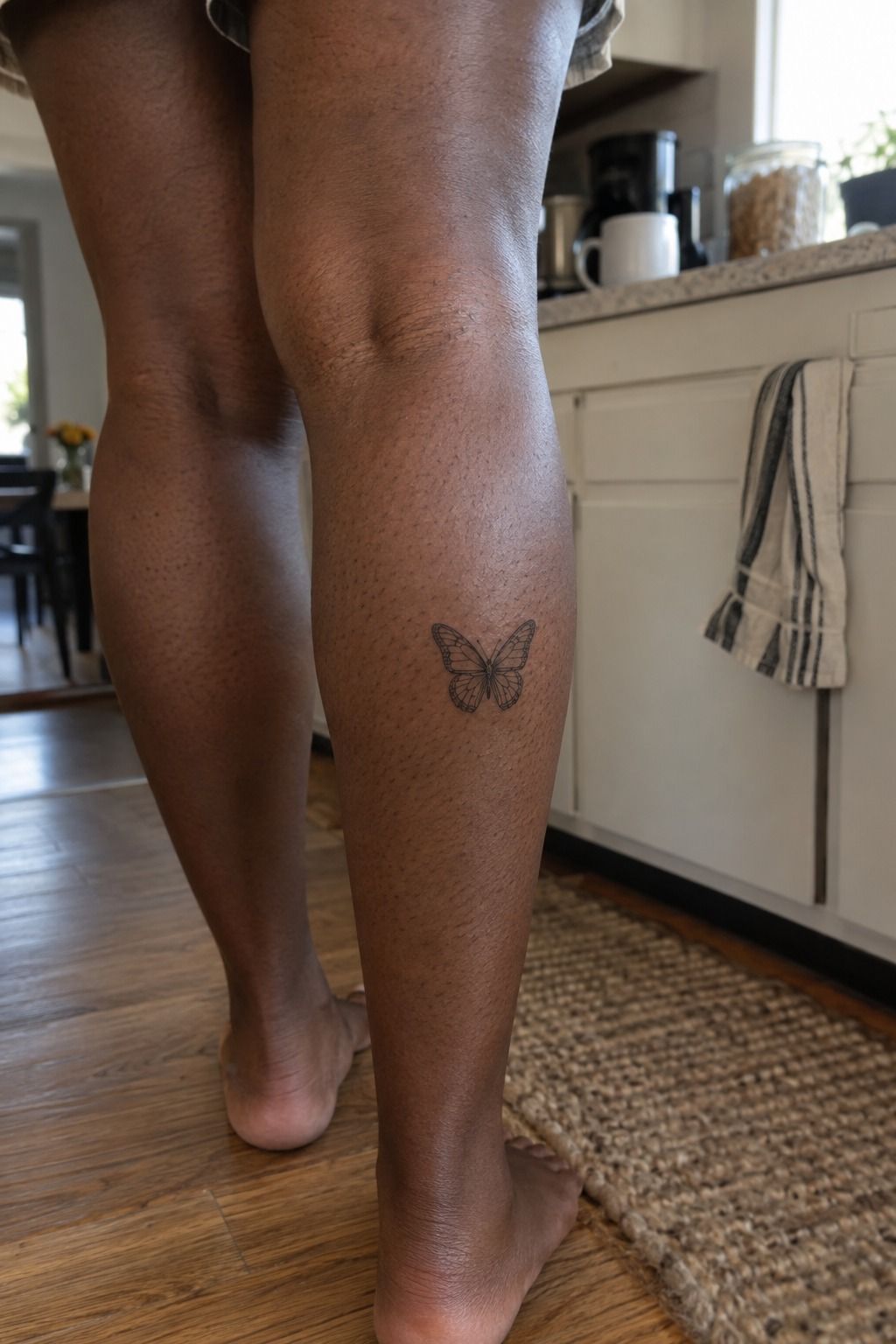
An in-flight butterfly works well on the calf because the body gives the design space to move.
7What Should the Initials Say?
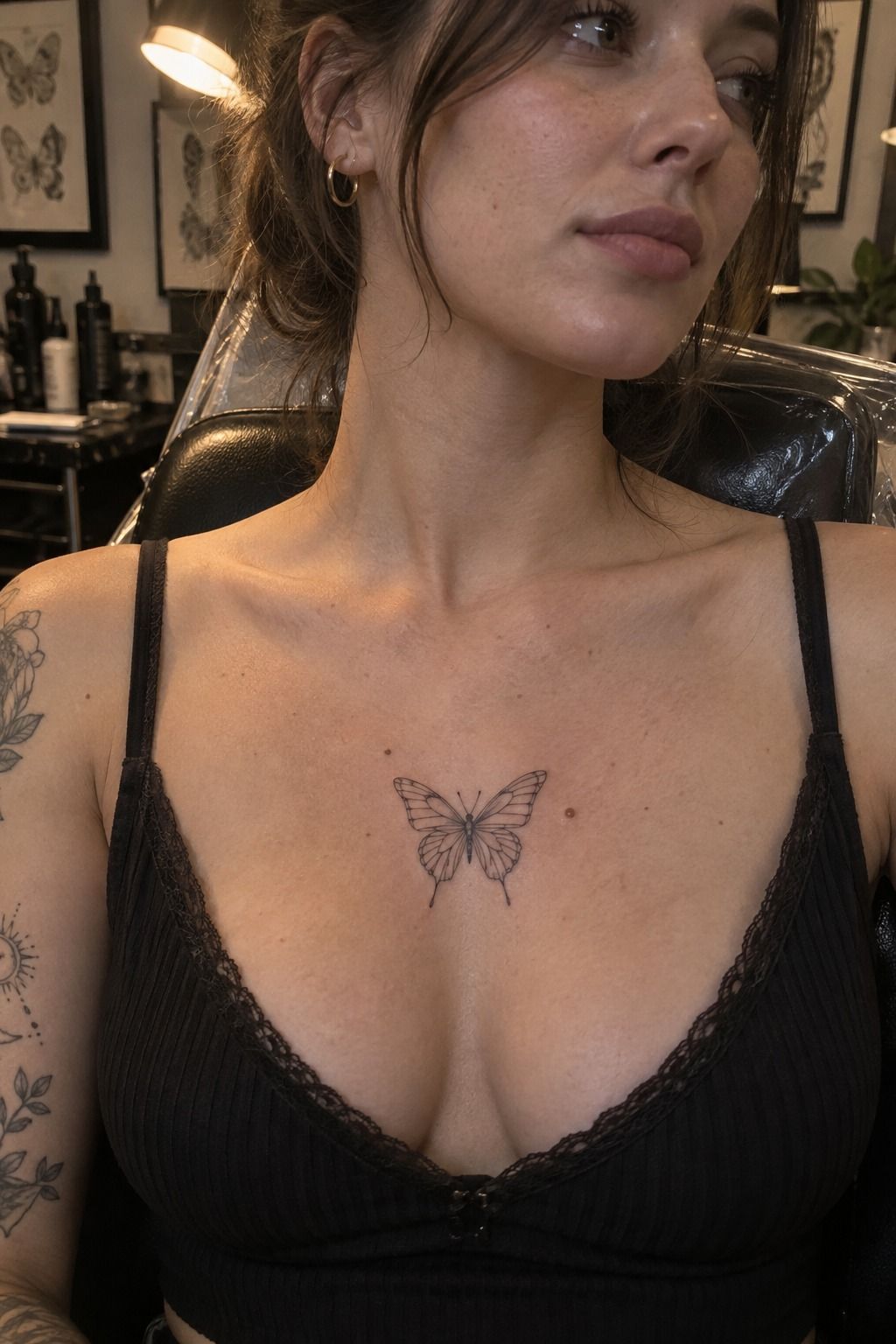
Initials turn a familiar butterfly into something more personal and symbolic. Place them beneath the wings, beside the body, or inside one open panel. Let the letters support the butterfly instead of taking it over.
Choose initials that remain legible at the final size. A narrow serif can feel elegant, while a simple handwritten mark may look more intimate. Your artist can test several letterforms before any ink touches skin.
The sternum can feel more painful because the skin sits close to bone. Keep the butterfly compact and the lettering restrained. A fine-line stencil lets you judge balance, spacing, and alignment first.
If the initials represent someone important, give yourself permission to make the design about your story. This snake and butterfly tattoo meaning guide explores layered symbolism. This strength butterfly meaning reference may help you find a more empowering angle.
8Use Color as the Accent
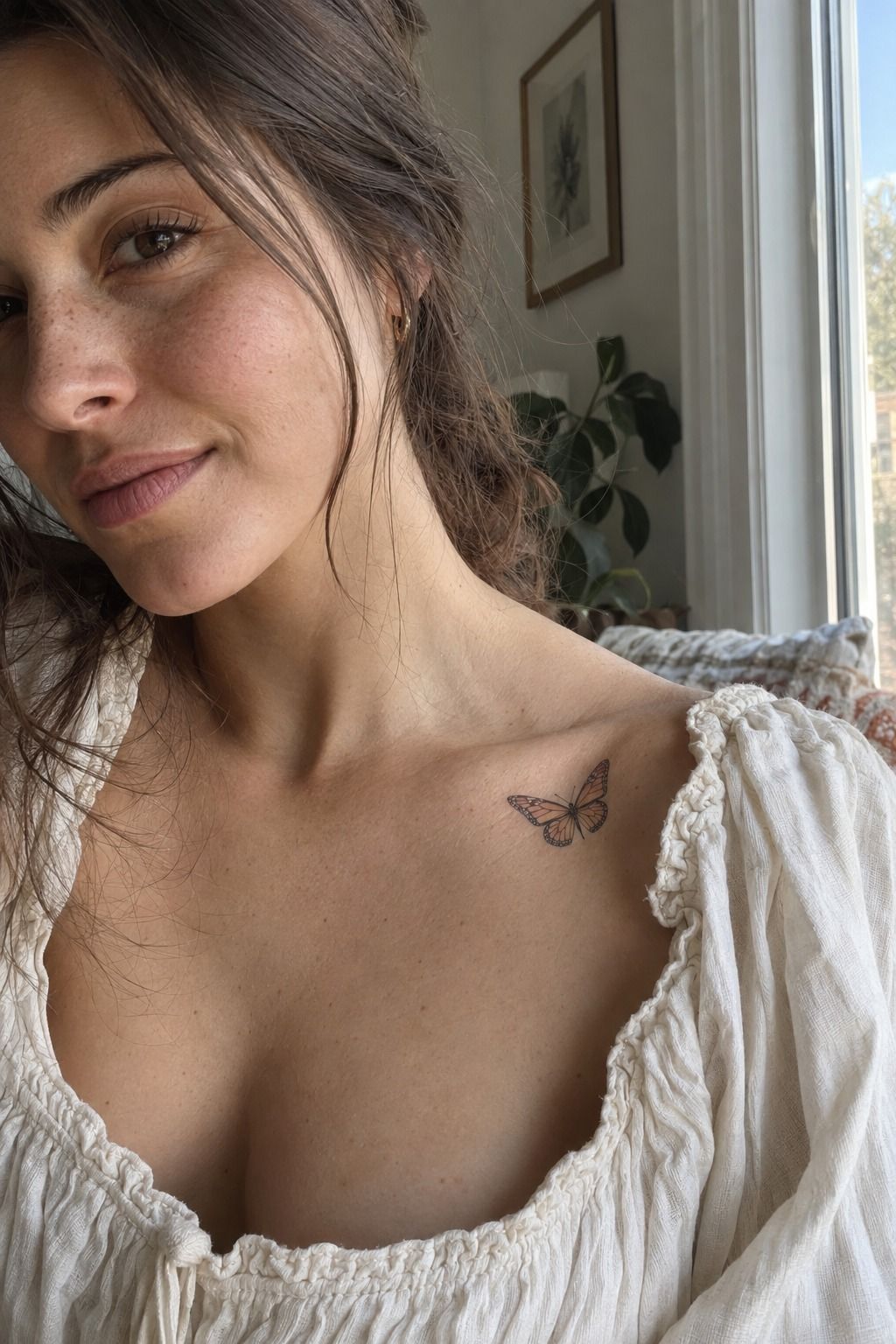
A small colored butterfly can look vibrant and whimsical when color works as an accent. You don’t need to fill every section. A muted blue, rose, or amber detail may be enough.
Discuss how the color may heal before choosing a palette. Several saturated shades can make a tiny design lose its crisp structure. A controlled wash often offers better value than a miniature rainbow.
The safest visual anchor is still black outline ink. It gives the butterfly a readable edge if the color softens over time. Fine lines can widen with age, and sunlight can speed that change.
If you’re comparing options, visit this watercolor butterfly tattoo guide and compare it with these small butterfly tattoo designs. A soft watercolor accent can feel dreamy while remaining controlled!
9Moonlight and Meaning: A Butterfly Pairing
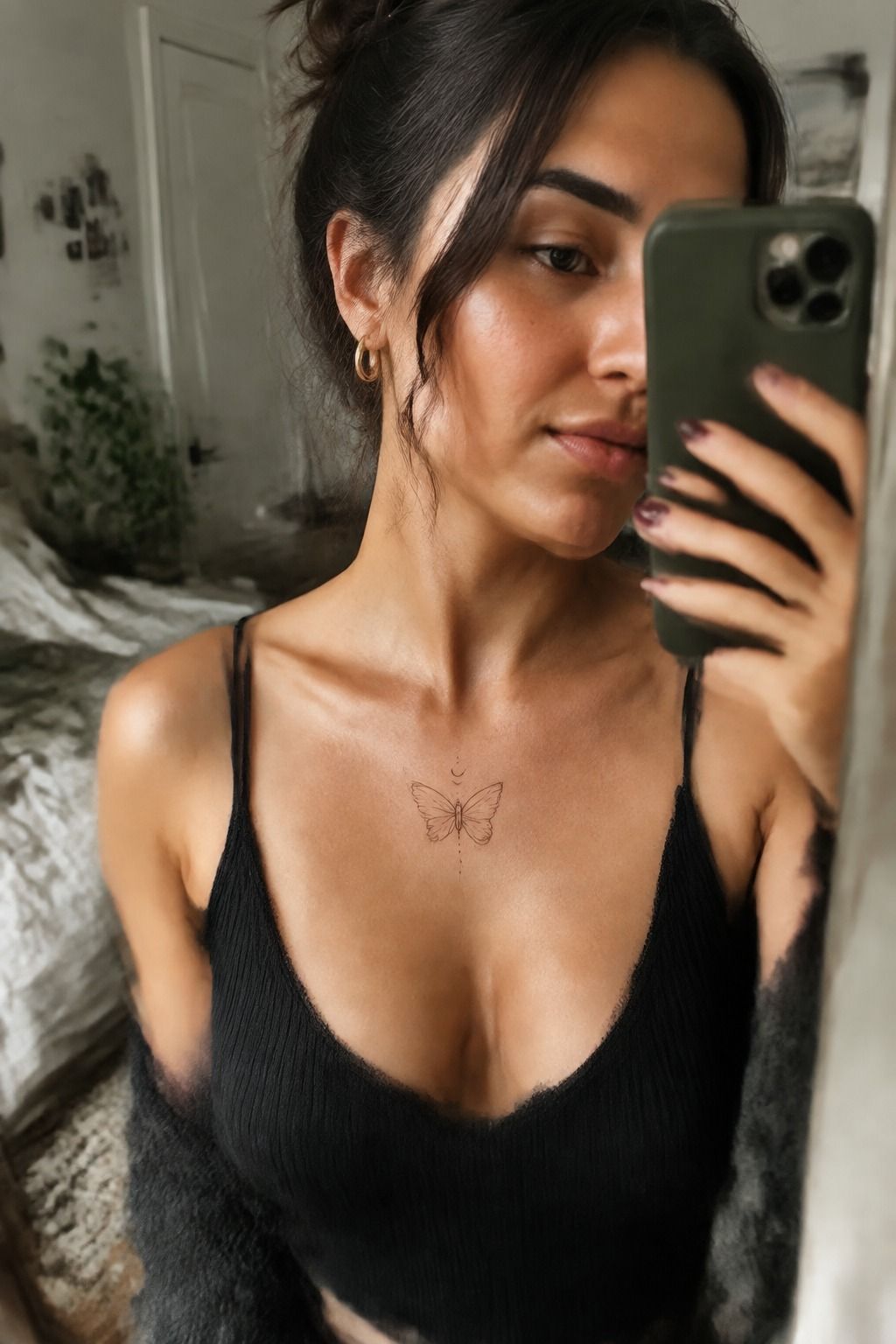
A moon beside a butterfly creates a sacred and ethereal pairing, especially near the sternum, ribs, or upper arm. The moon can sit beside one wing, above the body, or behind the design.
Keep the moon slightly smaller than the butterfly. The main subject should remain clear. A thin crescent can frame one wing, while a few dots create a quiet atmosphere.
Your artist can use crisp dotwork sparingly. I’d avoid a full star field in a compact design. More marks don’t always create more meaning.
This pairing can carry a haunting mood without looking gloomy. If you want symbolism with more depth, read about rose butterfly tattoo meaning and snake and butterfly tattoo meaning. Your personal reason should remain the strongest part.
10Why the Ankle Needs Extra Planning
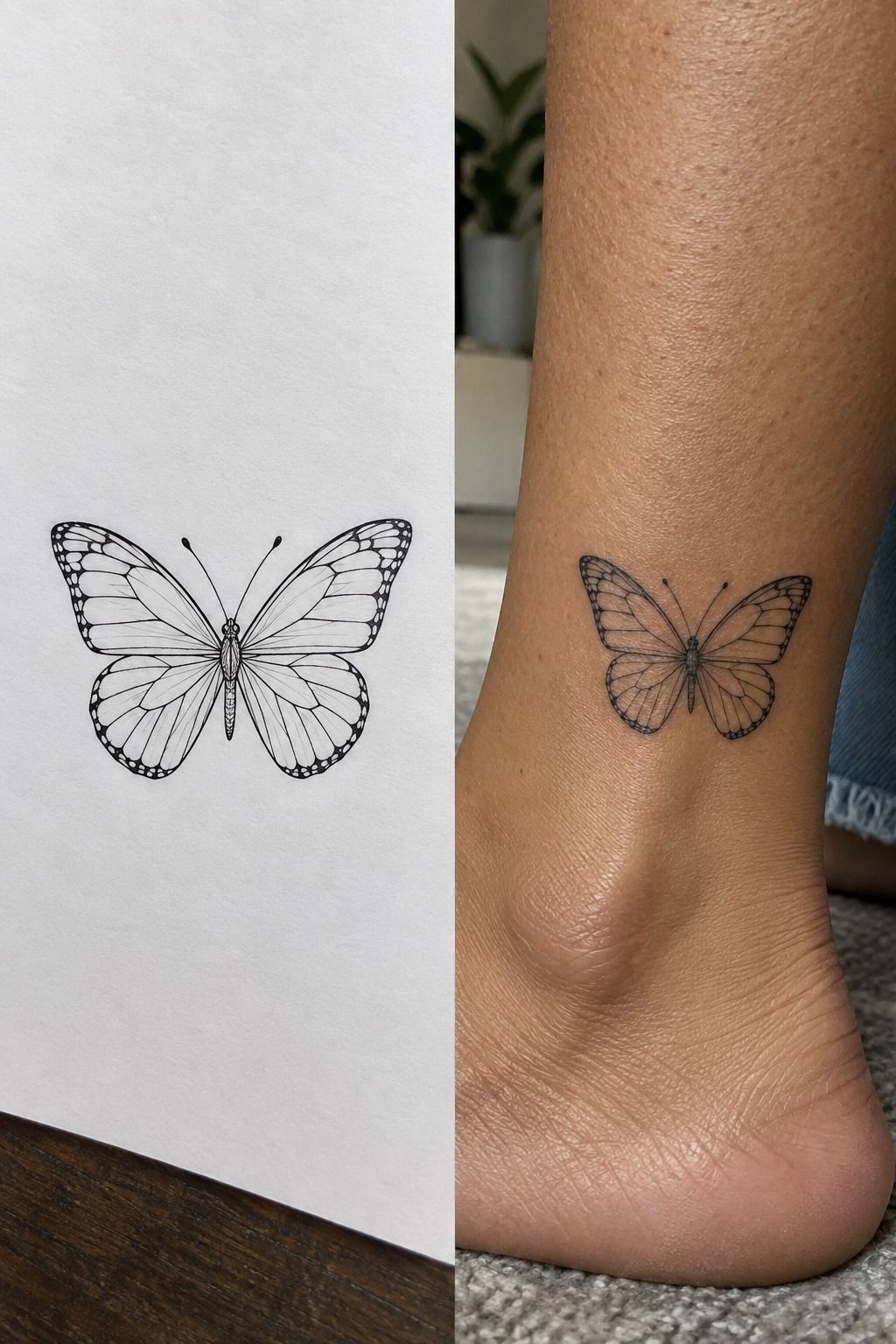
The ankle is a fierce and understated placement.
11Build Symmetry Without Making It Stiff
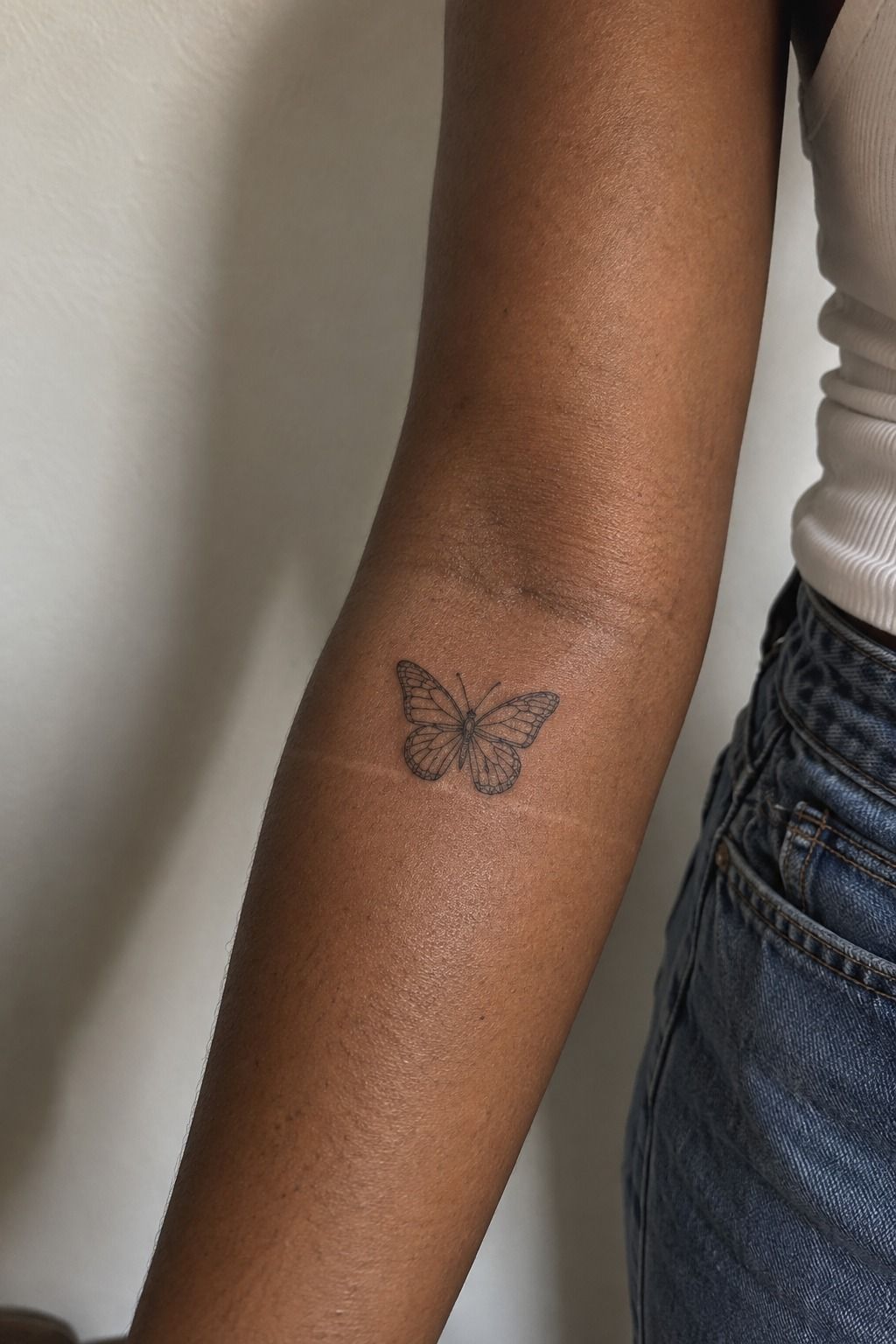
Symmetry gives a forearm butterfly a polished and iconic presence. Balanced wings can feel classic, but perfect mirroring isn’t always the goal.
Ask your artist to check the stencil while your forearm rests naturally. Symmetry on paper can look stiff on a curved body. A tiny adjustment may make the tattoo feel more flowing when you move.
The best symmetrical design isn’t necessarily the most detailed one. Choose a clear body, evenly weighted wings, and a few interior lines with breathing room.
Your butterfly can feel powerful through proportion alone. For another comparison, browse this small butterfly tattoo guide and these small butterfly tattoo designs. A symmetrical butterfly is classic, but spacing can make yours feel completely unique!
The Fine Line Aging Rule I Trust
I’m drawn to fine-line butterflies because they can hold meaning without taking over your body. Still, I don’t believe every tiny detail deserves a place.
I’ve seen designs arrive packed with veins, dots, stars, initials, and shading. Once reduced to skin, the shape loses clarity. My rule is simple: protect the silhouette first.
Placement is the second decision. Behind the ear and collarbone can feel discreet.
The wrist and forearm are easier to see. Fingers, ankles, feet, ribs, and sternum may bring more friction or discomfort.
A well-spaced butterfly on a tolerable placement will usually serve you better than an ambitious design you’ll spend years protecting from socks, sunlight, and constant washing.
I also care about the artist’s healed portfolio more than a polished social feed. Fresh tattoos can look sharp under studio lighting. Healed images show whether the lines remain readable.
Ask direct questions. How does this size age?
Which details would they remove? What does their aftercare involve?
If they can’t explain their choices, I’d keep looking.
The most empowering choice is the one that fits your reason, skin, and daily life. You don’t need a dramatic story for a butterfly. You don’t need to justify a quiet one.
Your design can be romantic, fierce, understated, or playful. I’d rather see one clear idea executed with care than a crowded piece trying to prove too much.
Fully healed ink still benefits from protection. Fine lines may widen with time.
That doesn’t mean your butterfly has failed. Skin is living material, and your tattoo will change with you.
A strong black foundation and thoughtful spacing give the design room to age with dignity. Those choices matter more than chasing every current trend.
Placement Tradeoffs That Matter
Visibility is often the first question. The forearm and wrist make a tattoo easy to enjoy. Behind the ear, ribs, and upper thigh feel more private.
Pain varies widely. Bone, thin skin, and high-friction areas may feel sharper. Your own tolerance matters more than someone else’s ranking.
Sun exposure can affect long-term clarity. If you spend much of your time outdoors, choose a location you’ll remember to protect.
Your work and clothing may influence the decision, too. A discreet location can give you more flexibility. A visible location can make the tattoo feel more expressive.
A timeless placement isn’t universal. It’s the location that suits your habits, comfort, and reason for getting the butterfly.
Choosing a Budget Without Regret
Small doesn’t always mean cheap. Artists still spend time consulting, preparing a stencil, setting up safely, and creating the tattoo. The total cost reflects more than ink.
Ask whether the quote includes the studio minimum, design time, and possible touch-up policy. A clear answer helps you compare value instead of comparing only numbers.
A lower price may not be worth it if the artist lacks healed fine-line work. A higher price may offer better value when the portfolio shows consistent results.
Set a budget before you contact studios. Then leave some room for aftercare products or a later touch-up. That keeps the decision practical.
The best budget is one that protects quality. You’re paying for judgment, hygiene, placement advice, and execution. Those parts can matter more than the final size.
What to Ask Before You Book
Ask to see healed examples from at least several months after the appointment. Fresh ink can hide how lines settle.
Ask which details the artist would remove. A confident artist may simplify the design to protect its future clarity.
Ask whether they regularly tattoo small butterflies, fine lines, fingers, ankles, or sternums. Specific experience matters.
Ask how they’ll place the stencil. Your body should be relaxed and positioned naturally before you approve it.
Ask about aftercare in plain language. You shouldn’t leave confused about washing, moisturizing, clothing, or sun protection.
A skilled artist won’t promise that a tattoo will never change. They’ll explain what can age well and what carries more risk.
Fine Line Aftercare That Protects Clarity
Follow your artist’s instructions first. Their advice should reflect the products and method used during your appointment.
Wash gently with clean hands. Don’t scrub, scratch, or peel flakes. Let the skin settle at its own pace.
Use moisturizer only as directed. Too much product can leave the surface overly damp and uncomfortable.
Avoid swimming and strong sunlight while the tattoo heals. Friction can also cause trouble, especially around the ankle, wrist, and finger.
Wear loose clothing when the location is tender. Don’t cover the tattoo with anything your artist hasn’t recommended.
Once healed, use sun protection whenever the tattoo will be exposed. Consistent aftercare won’t stop every change, but it can help preserve clarity.
The Questions I Get Asked Most
How much does a small fine line butterfly tattoo usually cost?
A small fine line butterfly tattoo in the US often costs around $100 to $300. A studio minimum may be about $50 to $100. Hourly rates can range from $100 to $250.
Your city, artist, placement, and design complexity will affect the final total.
Are small fine line butterfly tattoos a good idea for a first tattoo?
Yes, they can be a meaningful first tattoo because the design is readable and adaptable. You’ll still want to consider pain, visibility, and aftercare. The forearm, shoulder, or thigh may feel easier than a finger or sternum.
How do I choose a tattoo artist?
Review healed photographs, not only fresh work. Look for clean linework, balanced symmetry, and consistent spacing.
Confirm that the studio follows strong hygiene practices. Ask whether the artist works regularly with fine-line designs.
How much do small fine line butterfly tattoos hurt?
Pain varies by person and placement. Ribs, feet, hands, and sternum are often more sensitive.
The forearm, thigh, and shoulder may feel more tolerable. Tell your artist if you need a pause.
How long does a small fine line butterfly tattoo take to heal?
The surface commonly settles in about 2 to 3 weeks. Complete healing can take roughly 2 to 3 months. Wash gently, moisturize as directed, and avoid direct sun and swimming until your artist says it’s safe.
What’s the best placement for a small fine line butterfly?
The forearm is a practical choice if you want easy visibility and steadier healing conditions. Behind the ear feels discreet.
The collarbone creates a graceful horizontal shape. Weigh visibility, friction, sun exposure, and pain tolerance.
Where I’d Start First
If I had to pick one, I’d start with a small fine line butterfly on the forearm. You can see it clearly, protect it more easily, and give the wings enough breathing room.
I’d choose a crisp, personal design with an open silhouette and limited interior detail. That combination offers strong value without making the tattoo feel plain.
Pin this small butterfly tattoo guide for later. Take your time choosing the artist, placement, and details you’ll still love years from now.
7 responses to “11 Small Fine Line Butterfly Tattoo Ideas That Age Well”
[…] 11 Small Fine Line Butterfly Tattoo Ideas That Age Well […]
[…] 11 Small Fine Line Butterfly Tattoo Ideas That Age Well […]
[…] more variations, compare this with our small fine line butterfly tattoo ideas. You’ll notice that the most timeless versions aren’t the busiest ones. They’re crisp, […]
[…] gray pieces looked less clear than the solid black ones. If you’re comparing options, this small fine line butterfly tattoo collection helped me notice how much the empty space […]
[…] better chance of preserving that crisp spacing after healing. For more fine-line comparison, browse small fine line butterfly tattoos and study the distance between repeated […]
[…] can compare proportions with these small fine line butterfly tattoo designs before your appointment. You can also review these small butterfly tattoo references if you’re […]
[…] can compare this approach with our small fine line butterfly tattoo ideas before your appointment. The goal isn’t to copy one image. It’s to notice which details still […]